Connections and impressions from Assisi

For the last week we have been enjoying the beauty of Umbria. At the same time my hope of connecting with some people in the valley we are staying in was realized.

There are fields with scattered poppies everywhere here, very beautiful

The first few days here we were finding our feet, me still getting used to driving on the right side of the road, finding local supermarkets and so on. In between I managed to make some good connections. With the help of a young Italian couple staying in the apartment next to ours I managed to talk to Guiseppe, the co-owner of La Casella Marilena where we are staying, about my interests. He then connected me with a local woman, Katharina. Through Katharina we met Alfredo and Christine, a couple who own a 100 ha organic farm and a restaurant in the hills here. Last night we had dinner at their lovely restaurant and talked about our journey and my work. They were very interested. It emerged that they are part of a group of people who moved to this valley in the 1970s and have been working over a long period of time on environmental issues. Their networking activities are on-going. The challenge they have had is being seen as outsiders by the long-standing local farmers and community. However, over time, they have worked to make connections and try and influence positive changes with the community. I see a real opportunity to help facilitate stronger connections and interactions. Now is the time for this to happen, as we’ve seen and heard in every place we’ve visited so far on this journey.

Today we went to Assisi. This was a very special day. St Francis of Assisi was a very special person at a time of much conflict, with a universal message that is very relevant now. It is worth repeating part of the text from the brochure we collected from the Basilica of St Francis in Assisi…

“Franciscan existence is an immense space where God, man and the world of nature harmoniously find their place. In Assisi even the sun, moon, stars, fire, water and wind feel at home because Francis dared to call them ‘brothers’ and ‘sisters’.”

Reading this reminded me of a movie I saw about 32 years ago, about the life of St Francis “Brother Sun, Sister Moon”. This movie made a very big impression on a then 16 year old. What moved me most in the Basilica was the Giotti painting of “The Sermon to the Birds”. We walked from the Basilica to the highest point in Assisi for a beautiful view over the village and surrounding countryside. As we left Assisi I was captured by images of field and sky, with Assisi and the Basilica in between. And then a sign to the Sanctuary of Rivotorto caught my eye. This is named the ‘hovel of St Francis’ where the first Franciscan community was briefly housed … the humble, simple dwelling now overwhelmed by the church of Rivotorto.
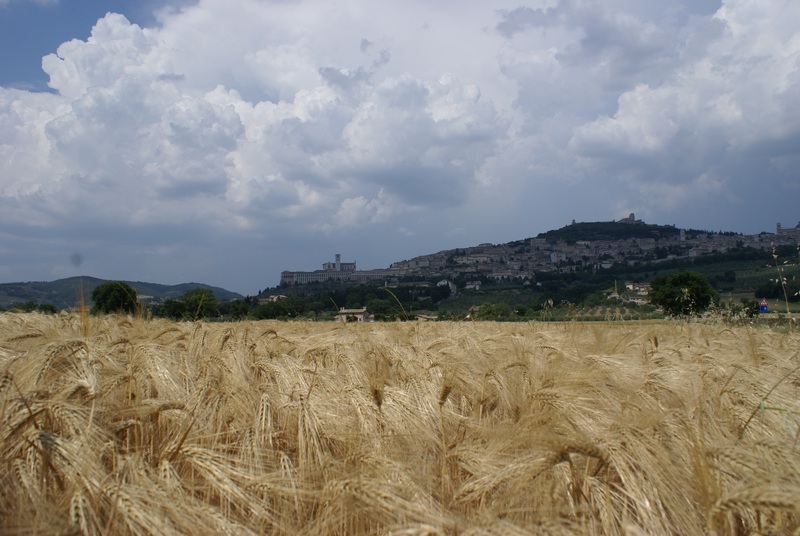
The village of Assisi, between earth and sky

On our return to the commune of Lisciano Niccone we drove into a thunderstorm and then beautiful scenes of sun radiating through clouds over the nearby village of Mercatale.
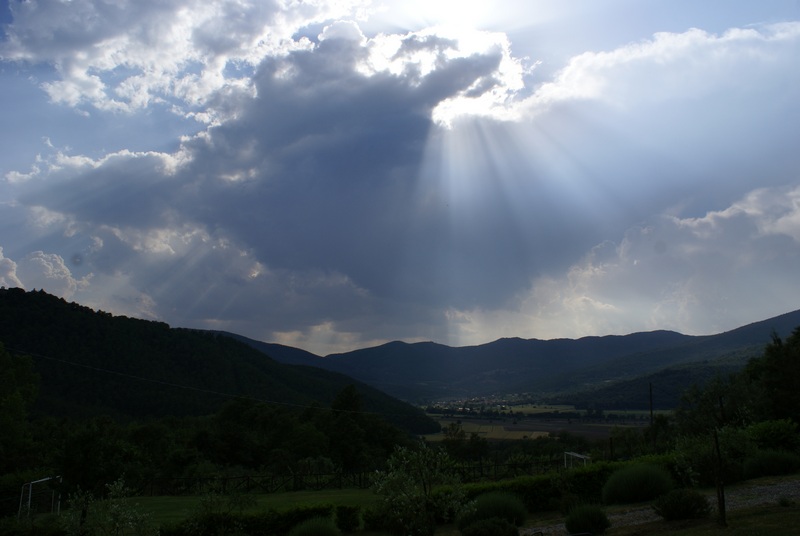
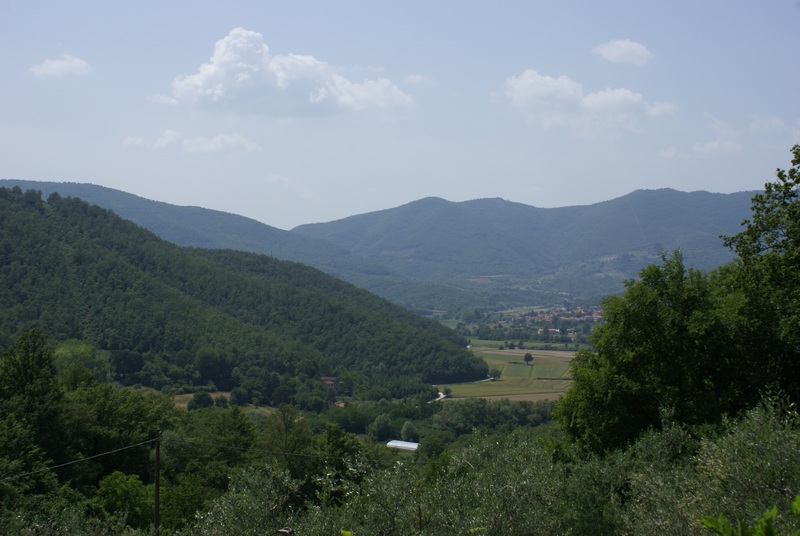
A stunning scene from our temporary home at Marilena la Casella, looking towards Mercatale

Lisciano Niccone, Umbria

Yesterday (21 May) we came to a tiny place called Casa Vacanze Marilena la Cassella, in Lisciano Niccone Commune, Perugia Province, Umbria. Firstly we had to collect our lease car from near Rome airport, and I had to quickly adjust to driving a left hand drive car on the right side of the road on a fast moving motorway. After more than three months of flying, being on trains, being driven to places, this was quite a challenge. But I did well and here we are in Umbria!

After all the challenges since we left home on 8 February this is an incredibly welcome, and stunningly beautiful, haven. Last night, with the help of some other guests here, I talked to Guiseppe who owns this place with his wife Marilena. I talked briefly about our journey and my work. There is something very special about the environment here … tree clad hills, small villages, grapes and olive trees in pockets on the slopes, cultivated land on the flats. I am sure that it is not all perfect, but there is a powerful sense of harmony with nature here.

The beautiful harmonious landscape of Lisciano Niccone in Umbria, a beautiful haven after three and a half months of travel

Reflections from Rome

Just over a week ago, on 14 May, we arrived in Milan and next day Emma decided to join us, after three months at Origlio Steiner School near Lugano. It was wonderful to have her with us again. We are very grateful for Paolo and Iva who very kindly hosted us for four nights in Milan

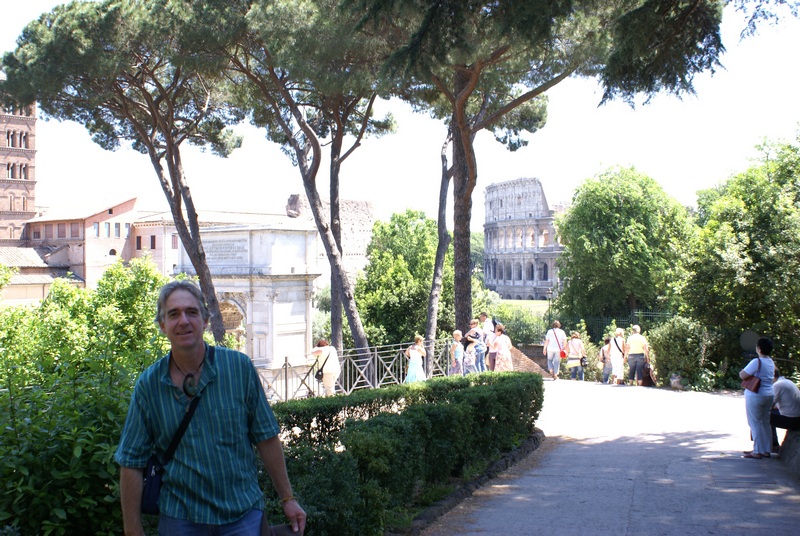
On 18 May we all flew down to Rome, where we spent three nights and two days. For me this was another part of a personal journey that began in Egypt. My grandfather was in Egypt in WW1, and my father served in both Egypt and Italy in the latter part of WW2. Visiting the Colosseum and then the Palatine (the site of the main centre of historic Rome) brought back a very clear memory of my father talking about his time here in Rome. It was a place he had wanted to bring us all, a dream that he never realised in his life. This made it particularly memorable to be here with my family.

As we walked around the ruins of a civilisation that collapsed around 1500 years ago I reflected on the cycles of nature, the rise and fall of life, of civilisations. I wondered how many of the many tourists there were consciously reflecting on this in the context of the current state of our modern world. The important message is to become conscious of cyclical nature of all things, including human civilisations. Most importantly we need to be more aware of the good things that are already rising which I believe offer us true guidance for the future.

Walking through the ruins of the Palatine, Rome

The desert

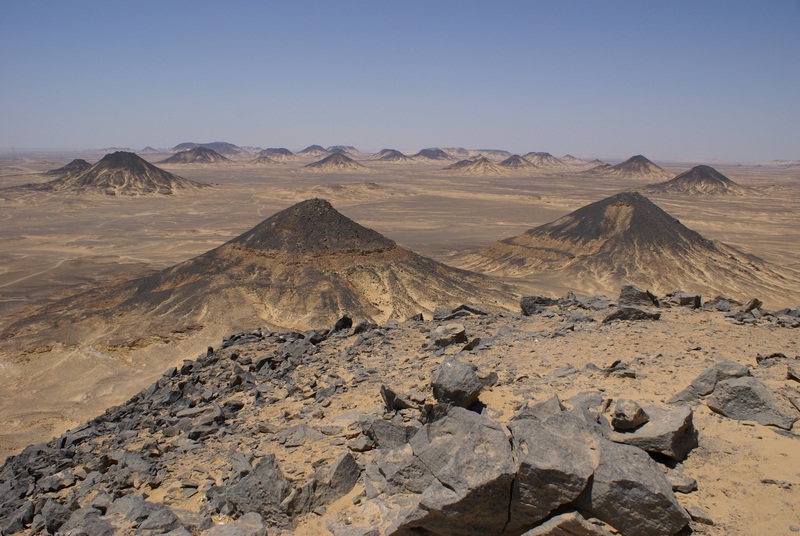
On Saturday, our third day, we drove out from Bahariya to spend a night camping in the desert. We stopped in the Black Desert, where I climbed a peak to view an amazing scene of extinct volcanoes. We then travelled on to a small oasis where we had lunch and a rest in the midday heat.

The Black Desert
The Black Desert
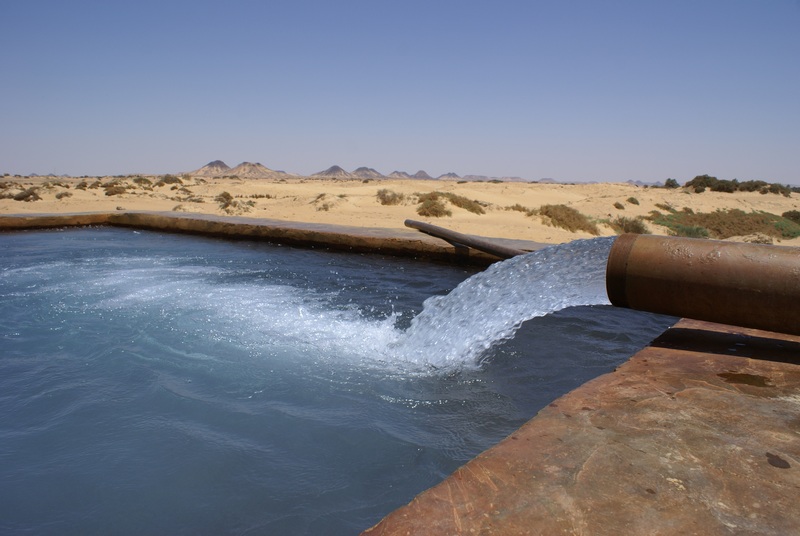
On the edge of the Black Desert. Here your understand the true power and importance of water to life

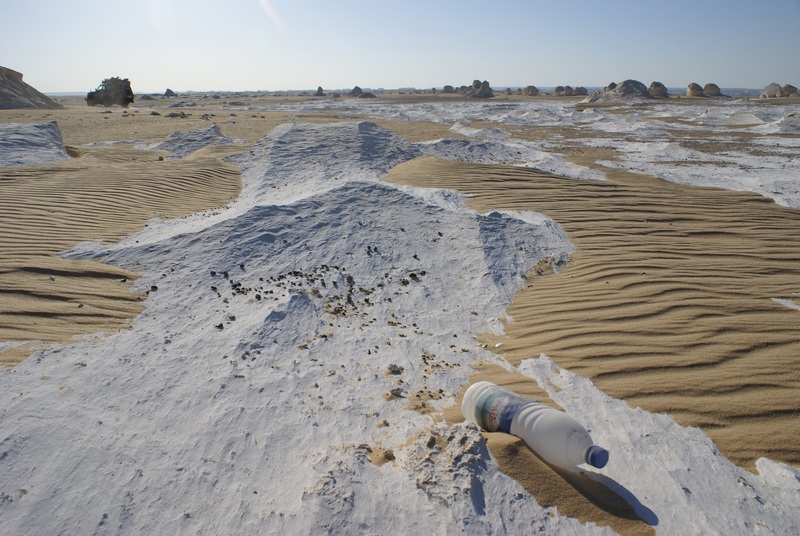
In mid afternoon we drove on to a place called Crystal Mountain and then to the White Desert, where we set up camp for the night. Stunning, silent, beautiful starlit night. Marred slightly by obvious signs of human presence; plastic bottles thoughtlessly left in the desert sand. But a great experience to sleep in the desert under the stars. It was hard next day, driving back to Bahariya and then to the noise and pollution of Cairo.

“Leave only your plastic drink bottle” - is that what we want as our 21st century footprint?

In the end our time in Egypt seemed too short. There is a lot more that we need to know about changes happening in the desert, as much as in the mountains, with our rivers, our forests. People have lived with the desert for millennia. We associate the word “oasis” as a place to rest and recovery, a place of calm amidst the storm. What happens when we deplete the water that sustains our oases, when our personal oases become barren places?

The greatest reward as our journey continues is the increased power we feel in sharing stories from other places and encouraging the people we meet to keep doing the good things they are engaged in.

Bahariya Oasis

Before coming to Egypt we had no fixed plan. My principal contact was with Sekem. Before leaving New Zealand I thought perhaps we might spend some time in different parts of the Nile River and Delta. The Nile River is the life blood of Egypt, supporting the vast majority of the population. Instead, after visiting Sekem and meeting Dr Zakaria El-Haddad, I was compelled to travel into the Western Desert.

We spent four days and three nights in the desert. With our relatively limited time we only travelled to Bahariya Oasis, the closest of the oases to Cairo … 360km and a four and a half hour drive. Sekem staff assisted by providing names of people to visit. The journey out into the desert was a totally new experience. It was certainly a powerful contrast to the mountains of Nepal; but in some way there was also a connection, in the grandeur of the landscape and power of nature that both places conveyed.

At Bahariya Oasis we first met Ahmed Shawky and Corien Elstgeest from Elysium. Corien is from the Netherlands and moved to Bahariya 10 years ago. She is there is with a mission, working together with Ahmed and her partners in the Netherlands.

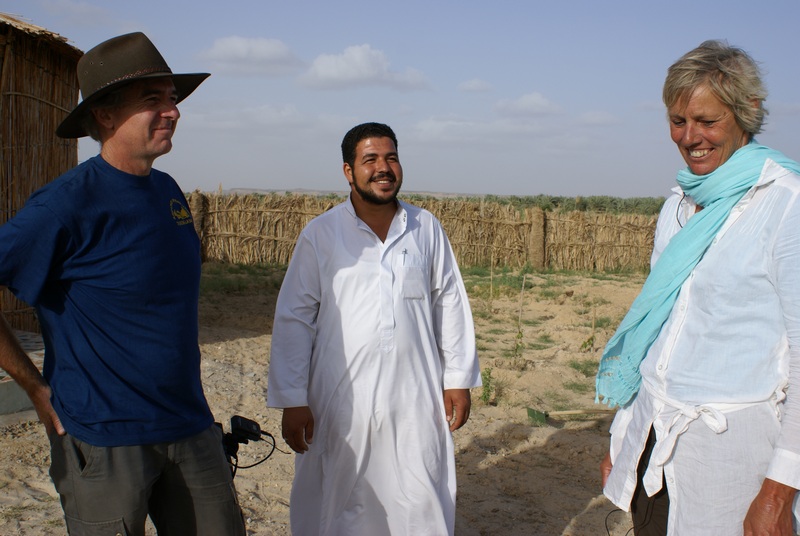
With Ahmed Shawky and Corien Elstgeest at Elysium

“You can learn a lot in the desert, it brings you to the real life. There you can feel your own self … There you are alone with the mountains, the sand, the sun, the moon, the stars. There you can really have the silence … After a visit of, for example, one week in the desert, then your whole system is changed and you can think differently, you can look differently to the rest of you life.  And you know how important the desert is for all of us …” Ahmed Shawky and Corien Elstgeest

We were very grateful to meet these people who provided a welcome home for us in between our various activities and very kindly took us around Bahariya one afternoon. Elysium is a relatively small initiative at present, but with a clear vision, inspired by the work at Sekem. They have developed a retreat where people can come and stay and experience the quiet and power of the desert environment. On their land they are implementing biodynamic agriculture practices. They also have aims to develop an educational and training facility to help develop sustainable future pathways for people living in the desert.

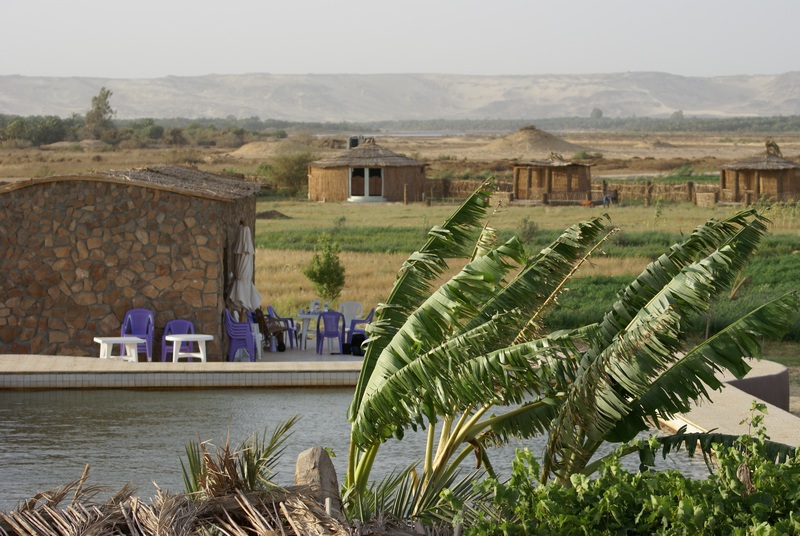
A view of Elysium where Ahmed and Corien are working to realise their vision, inspired by the work at Sekem

Life in the desert can’t exist without water. At Bahariya Oasis we learned that there has been relatively little rain in the last 20 years, insufficient to recharge the groundwater that everyone relies on. At the same time there has been increased development and demand for water, promoted through government policies. In many places people are using pumps where they weren’t needed in the past. People are digging deeper to get their water. At the same time it appears that there is a lot of waste from the flood irrigation of date groves, with a lake now formed from the runoff. It became increasingly apparent that the delicate balance in this oasis is tipping towards a situation of future water crises. This provides a challenging situation for Ahmed and Corien in realising their vision for Bahariya.

Ten years ago water was running freely from this well as it had been for a long time before. Now this well is dry and has been replaced nearby by a much deeper well with a diesel driven pumping station
A lake has formed from irrigation runoff, indicative of the amount of water that is being wasted

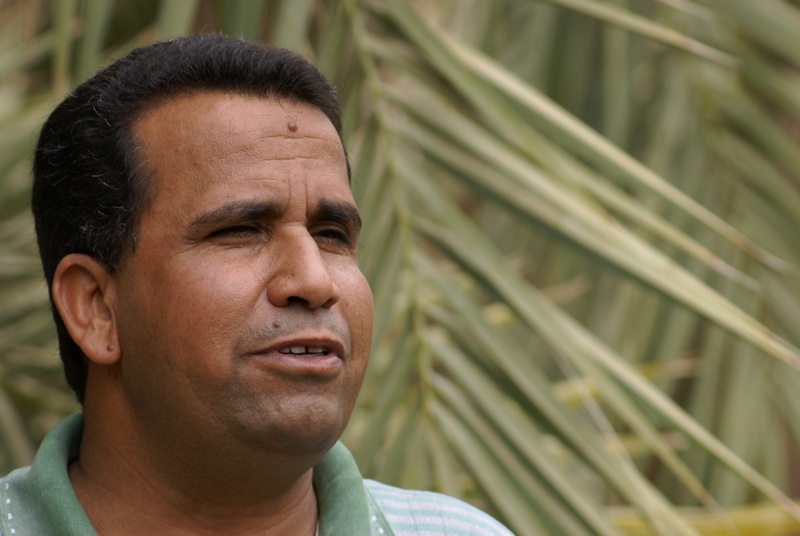
We also met a date grower, Mr. Raafat Abd elAlim, whose family has supplied Sekem with dates for the last 16 years. As he said, the desert is their home, it is their life. But everything they have depends on water. He talked about the changes with water. For centuries the water has risen naturally from the underground aquifers. But with the expansion of agriculture this is happening less and less, with increased pumping from greater depths. The water is now being mined.

“The water, a little. The water now a little in oasis.”

In our short time with Ahmed and Corien we talked about the importance of acting now for the future and working to engage the community. This was a very good exchange, adding to our stories from different places, but also an opportunity to share ideas and encourage them in their work.