A man and his vines

Yesterday I met Jean-Pierre Caumont at the Montcuq market and bought some of his wine. This morning I drove to his farm to film an interview with him, most likely my only farmer interview in France and the last on this journey. Jean-Pierre comes from a farming family in the village of Escayrac. He went to University but was drawn back to the land and now farms farms 60ha of cropping land and 3.5ha of wine grapes with his wife, Claire. They also own about 40ha of forest land for biodiversity and aesthetic benefits. Jean-Pierre has always felt an affinity with nature, but farmed conventionally for many years. Increasingly he saw the effects of intensive use of chemicals and also began experiencing more chaotic weather patterns. So he decided to move towards an organic production system. The term ‘organic’ or ‘biologique’ in French, is one that he and his wife, Claire, have been cautious in using. They are people who are simply passionate about the land and the environment and don’t really like to be labelled in a particular way. Over the last 20 years Jean-Pierre has noticed more extreme weather events, more unpredictability with rainfall, and higher temperatures. Hotter summers are being reflected in increased alcohol content of wines in the region. He perceives greater challenges in the future with cropping than with the wine grapes. The deep-rooting of the vines enables them to withstand drought, for example. His experience is that with organic soil management, biodiversity protection and diversity of production they have a greater capacity to buffer against climatic extremes. Both Jean-Pierre and Claire are strongly committed to protecting local biodiversity, demonstrated by the fact that they recently bought a neighbouring piece of woodland to prevent another would-be buyer from clear-felling it.

If you live somewhere in Europe and want to support a couple of very dedicated people by purchasing their wine you will be able to find out about them over the web in the future. The name of their farm is Le Pech d’Auzonne. You can get mail order wine by writing to them: Claire and Jean-Pierre Caumont, Escayrac, 46800 Montcuq, France.
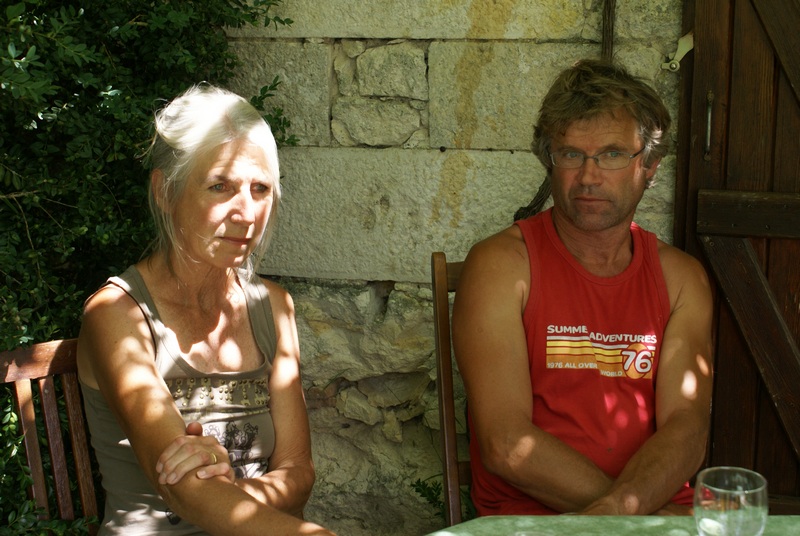
Jean-Pierre and Claire Caumont are deeply committed to protecting and enhancing their local environment for the future
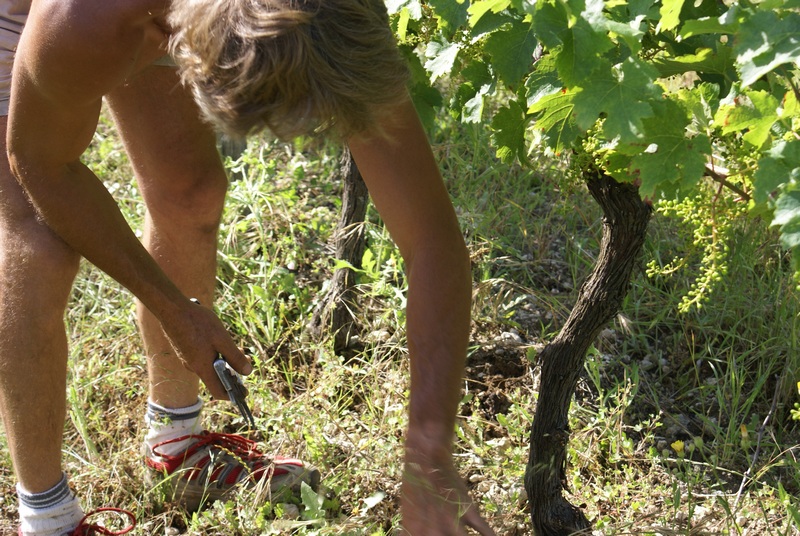
The man and the vine.  Jean-Pierre can honestly say that he knows every vine in his 3.5ha vineyard
The man and the vine. Jean-Pierre can honestly say that he knows every vine in his 3.5ha vineyard
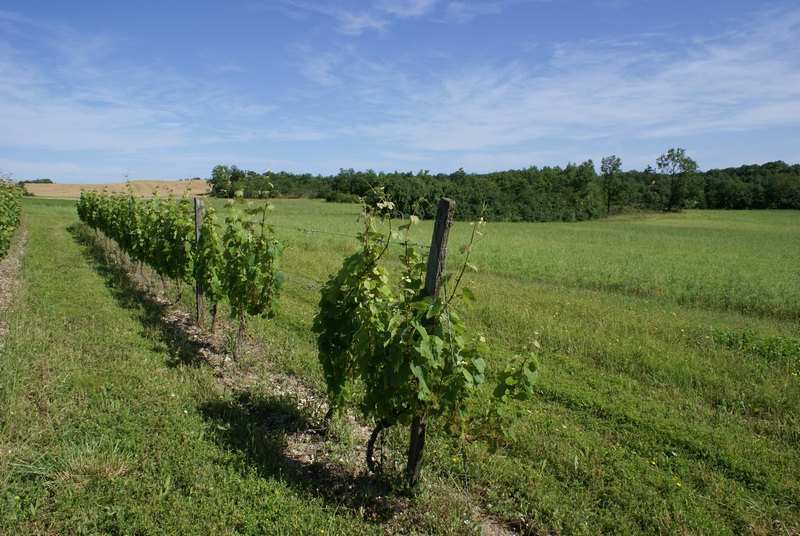
Vines with woodland in the background. The woodland was purchased by Jean-Pierre and Claire to protect biodiversity around their farm

Poggio di Camporbiano, a very resilient farm

When Giacomo and I returned to Poggio di Camporbiano Piero and his wife Patricia took us on a tour around some of their facilities and the farm. There was a lot to see in a short time. We learned about their on-farm research to develop their own vegetable rennet from a plant that is related to the globe artichoke; their honey production; their greenhouse for propagating vegetable seedlings for field production; their wheat production including a tractor that has the wheels changed depending on ground conditions to reduce compaction effects, machinery for field drying the wheat as it is harvested, the pasta production; animal care; water management; compost making; forest management.

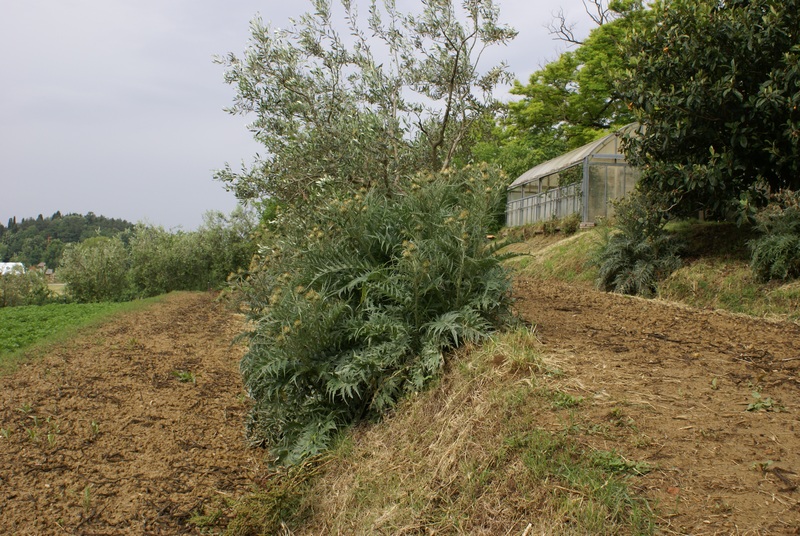
A relative of the globe artichoke provides a natural source of vegetable rennet. Patricia spent about a decade developing a technique for extracting rennet from this plant that didn’t taint the cheese
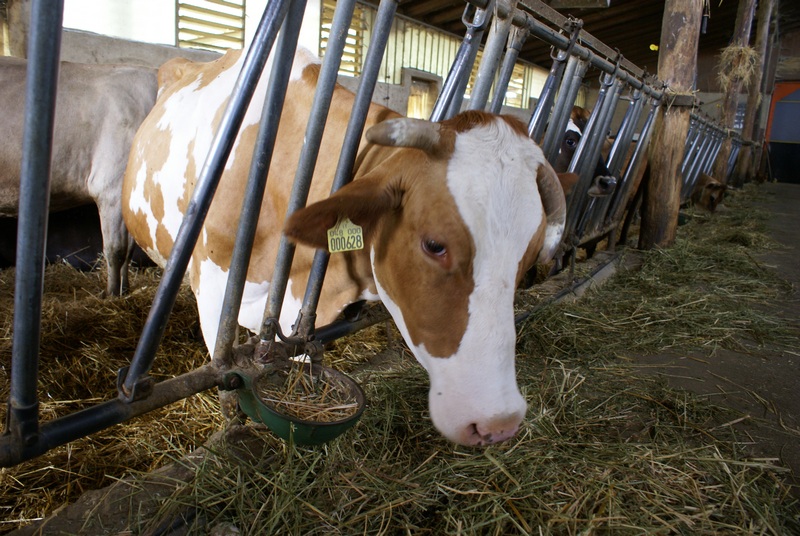
Dairy cows are housed for part of the day, where they are fed lucerne hay
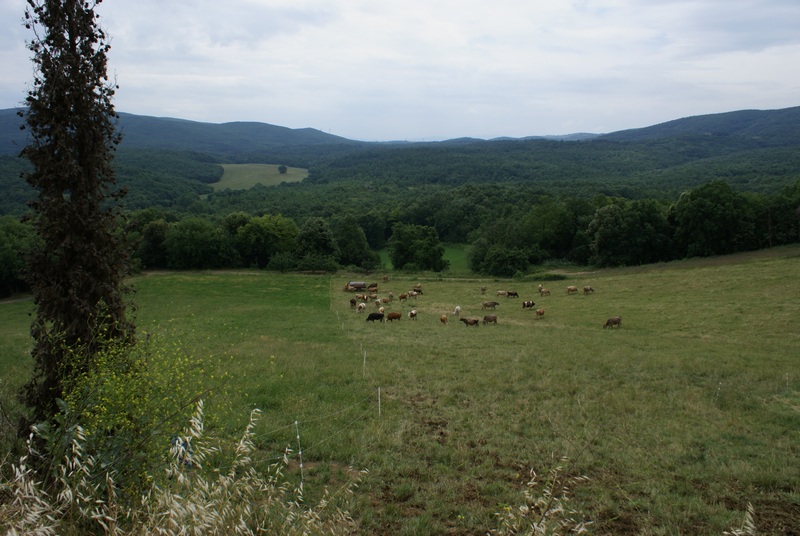
Dairy cows out in the field, forming part of a very diverse and resilient farming system
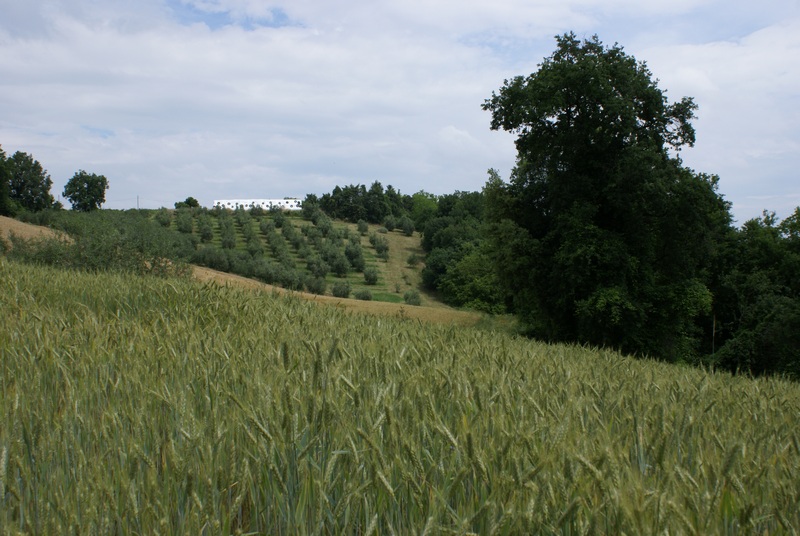
Wheat and olives, just part of the diversity of Poggio di Camporbiano, a farm that is ecologically and economically very resilient
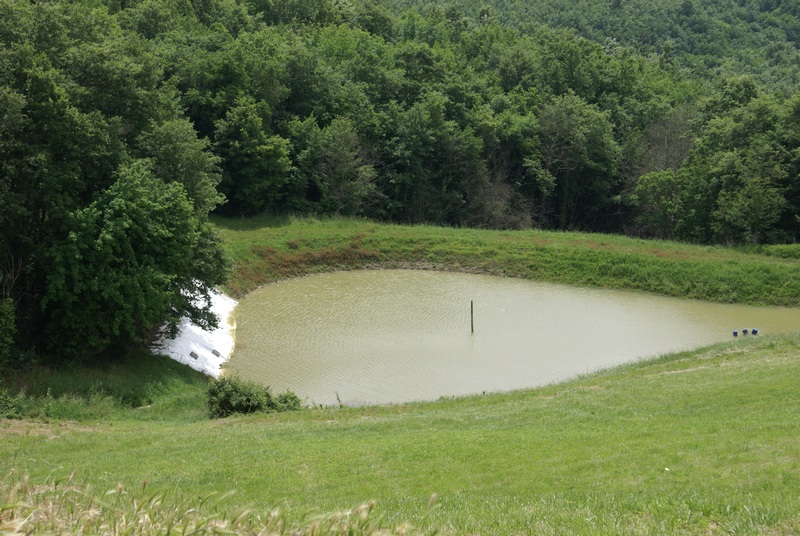
Dams for harvesting rainfall are vital for Poggio di Camporbiano, with low annual rainfall and no natural water

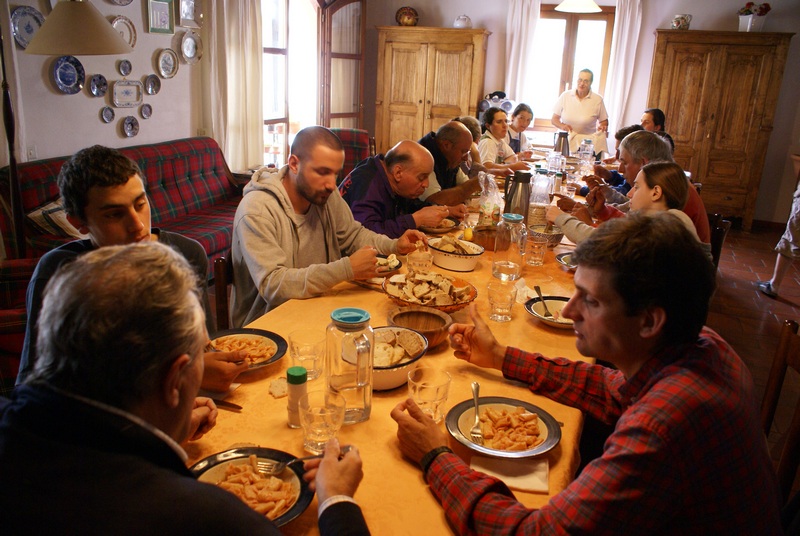
We then joined the whole of their small farm community for a delicious shared lunch. It was only at this time that I fully learnt about the full extent of the cooperative nature of this farm. Here is a small community of people who are deeply committed to an approach to farming and working with nature that is both very relevant now and increasingly relevant for the future.

A delicious shared lunch at Poggio di Camporbiano. Here is a small community of people who are deeply committed to a very holistic approach to farming and working with nature, drawing on traditional knowledge and wisdom but working in a very smart and technologically advanced manner

A week in Tuscany

Today we began our week of activities hosted by the Department of Agronomy and Land Management at the University of Florence. Thanks to my colleague, Professor Marco Bindi, and his staff (Sandra and Giacomo) for organising this week for us.

Our first stop was the University research farm, a 300ha property in the famous Chianti region of Tuscany. It’s a very beautiful place. The manager of the farm talked about some of their research activities, for example work they are doing on erosion control and water conservation through land contouring, and showed us around their facilities. I asked him about changes in climate that they are experiencing. His response was that nothing is reliable with the weather any more. Annual rainfall here is around 400mm. Historically most of this came in the winter months. Now the distribution is unpredictable. Temperatures are increasing, and rapid temperature changes are being experienced at times. Crops are being affected. For example when they pruned the grapes in the dormant winter period last winter they found that there was still sap flowing at a time when there would normally be no such activity in the plant. It is becoming very hard to manage farm activities with such changes.

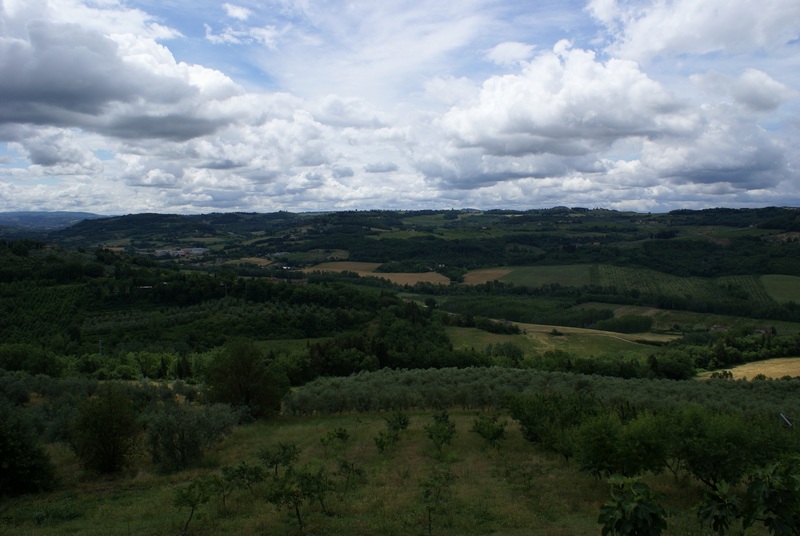
A typical scene from Chianti, Tuscany
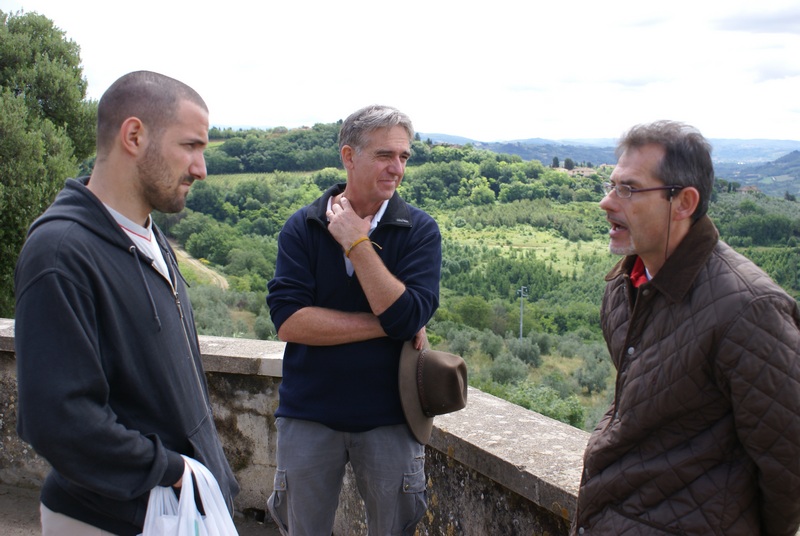
Gavin with Giacomo and the manager of the University research farm who talked about the challenges of more chaotic weather that they are already experiencing

After lunch in the nearby village we drove to a farm called Poggio di Camporbiano where we met Piero Alberti, a biodynamic farmer. Piero has been farming this 200ha property biodynamically since 1986.

With Piero Alberti, one of the smartest farmers I've met. “We can no longer rely on the proverbs of the past”

The farm is organised as a cooperative community with about 14 people living and working there. Piero was the first one to be on the farm and is responsible for most of the farming activities. He is a very very smart farmer, one of the smartest I have met in all of our travels and even compared to some very good New Zealand farmers that I have worked with. The focus is to farm this property as a living organism, with a focus on sound ecology, a strong social environment and a very robust farm economy. To achieve this there are a diversity of production activities, processing of farm products for sale, biodynamic production techniques, recycling of farm waste back into the farm, extremely smart management of a very limited water situation, and implementation of a self-sufficient energy programme. The importance and value of this ecologically balanced approach is reflected in the ability of the farm to sustain economic viability through a severe drought period several years ago. They managed the farm through this drought without needing the external economic support that other farmers in the area needed. In relation to climate change Piero made a very profound statement, that farmers in Italy can no longer rely on the proverbs of the past. Everything has changed and is changing very rapidly. The modern farmer, in his view, needs to both be smart in using available technology and develop a greater sensibility to nature. Their success is reflected in the fact that neighbouring farmers are beginning to follow some of their practices. Our time with Piero was quite limited, but I was so impressed by this story that I arranged a return visit for the following Sunday (3 June).