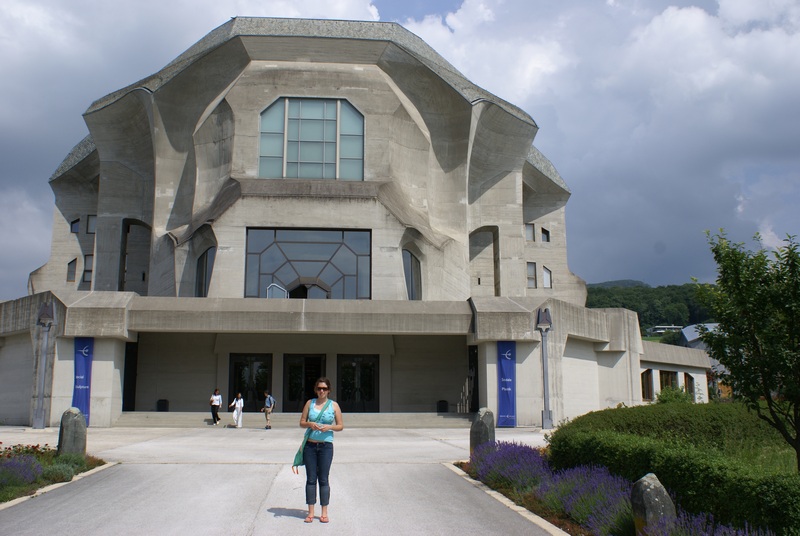
From Lugano we drove through Switzerland to Dornach, near Basel. It was evident everywhere that the Swiss understand the importance of trees in the landscape and in managing water catchments. In Dornach we met with Hans and Ineke Mulder who took us around the Goetheanum, the world centre for Anthroposophy. The Goetheanum is an amazingly organic building. Rudolf Steiner, who designed this and the first Goetheanum, was an incredibly insightful and prolific human being. His merging of spiritual insight and scientific thought covered many disciplines. I’m not an anthroposophist but I do have an open mind. I see a lot of value in what Steiner shared, particularly when expressed through living examples such as Sekem (see post “Sekem, Egypt”) in Egypt and Poggio di Camporbiano (see the posts “A week in Tuscany” and “Poggio di Camporbiano, a very resilient farm”) in Italy, and of course through the education of our daughters at Taikura Rudolf Steiner School in New Zealand. With the multiple challenges and potential crises that we are facing around the world, we need to be open to what Steiner and others have presented to the world. We cannot solve the many problems we have through the narrow, rational, thought that has created them.
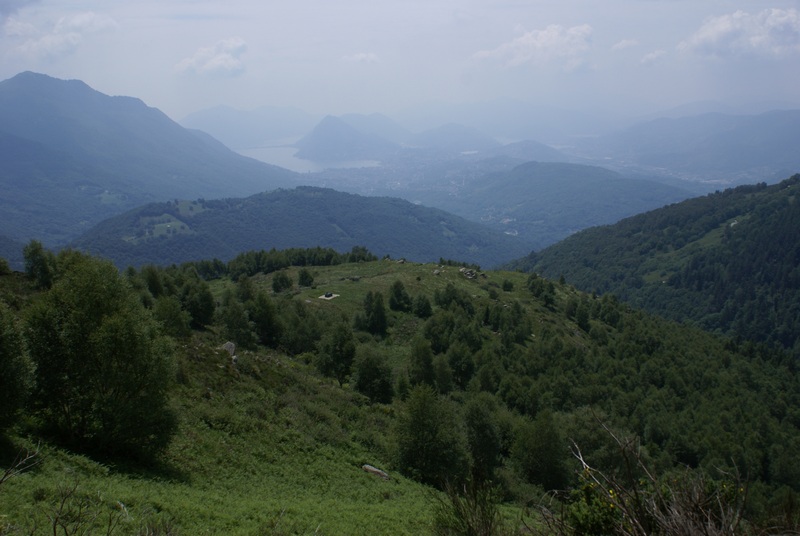
On the afternoon of 5 June we drove north to Milan, arriving in the dark. The next day we crossed the border into Switzerland. Our destination was Lugano, where we were going to stay with the Galli family, who hosted Emma for three months. After a couple of days enjoying Lugano we went for a walk with the Galli family on Saturday (9 June). We drove from their home up into the hills, above the forest line. We then walked to the site of an ancient Celtic settlement looking out towards Lake Lugano. The Celts migrated into Switzerland during the period 500 B.C. to 400 A.D. From this site we then walked up to the summer house of a local farmer. We stopped there and talked a while over some wine. I hadn’t expected this encounter but realised that here was an opportunity for another farmer interview. I arranged to come back today to film an interview with him.
Looking out towards Lake Lugano from the site of an ancient Celtic settlement. The water catchments around the lake are all forested, with strict rules relating to harvesting of trees
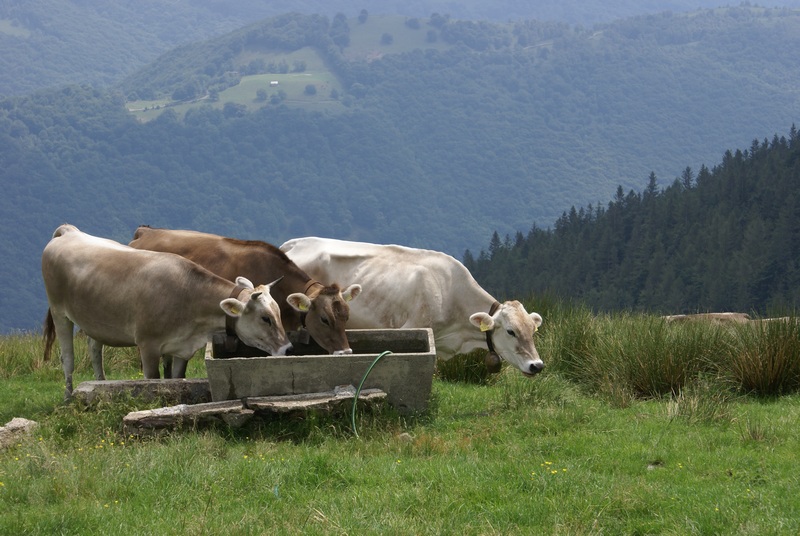
Renzo was not born to a farming family, but became a farmer nearly 40 years ago. His motivation was to live and work with the land, with the natural world. He and his family are alpine farmers. During the winter period they move down to their winter house and their stock are housed. In the summer period they move to the summer house, above the tree line, where the animals are able to free range on the herb pastures. Renzo talked about the dramatic reduction in snow cover that they now experience every winter. The winter rest period, which he considers important for the earth, animals and people, is no longer as it was. The climate is changing and nothing is predictable in the way that it was in the past. This is very unsettling and I think stressful for a family that has worked very hard over a long period. They are already farming organically. Renzo said what more can they do than they already are, working and living in a very balanced way?
There is a long history of winter rest and summer grazing in high alpine areas of Switzerland. This is beginning to change with higher temperatures and significant reductions in snow cover Renzo, a man who came to live and work with nature 40 years ago and is now finding that he can no longer follow the seasonal rhythms of the past
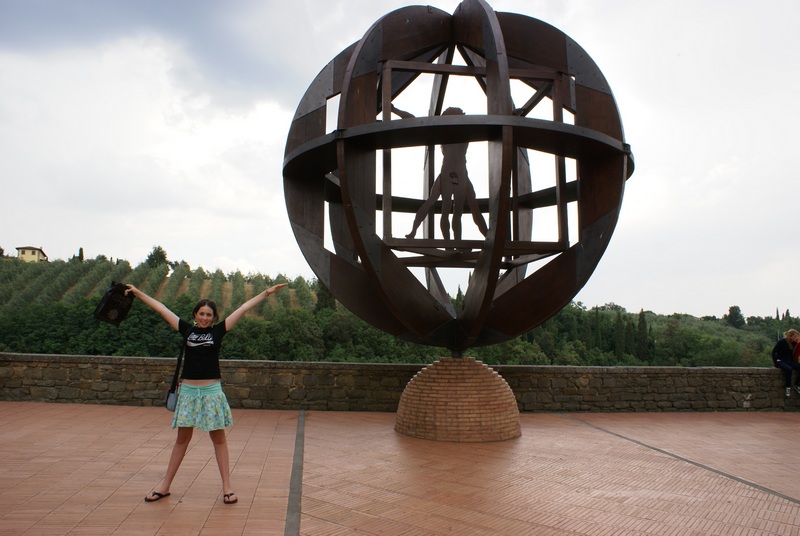
Today is our last day in Florence. It has been an excellent time and I’m very grateful to my host Marco Bindi and his staff. We have managed to mix a few farm visits and interviews, a presentation to people at the University and some local farm leaders, a visit to a research lab in Florence, and taking time to see some of Florence. It has been a great privilege to do the latter with Alice, whose class in New Zealand has just this week begun a study of the Renaissance. Here we are at the heart of the Renaissance, inspired by the work of Leondardo da Vinci, Michaelangelo and others. This experience has reinforced in me a need for a modern Renaissance … a reunification of the arts and sciences as we see in the life and work of Leonardo da Vinci, and a rethinking of how we work and interact with our natural world.
Alice, visiting the village of Vinci where Leonardo da Vinci was born. We need a modern Renaissance ... a reunification of the arts and sciences as we see in the life and work of Leonardo da Vinci, and a rethinking of how we work and interact with our natural world
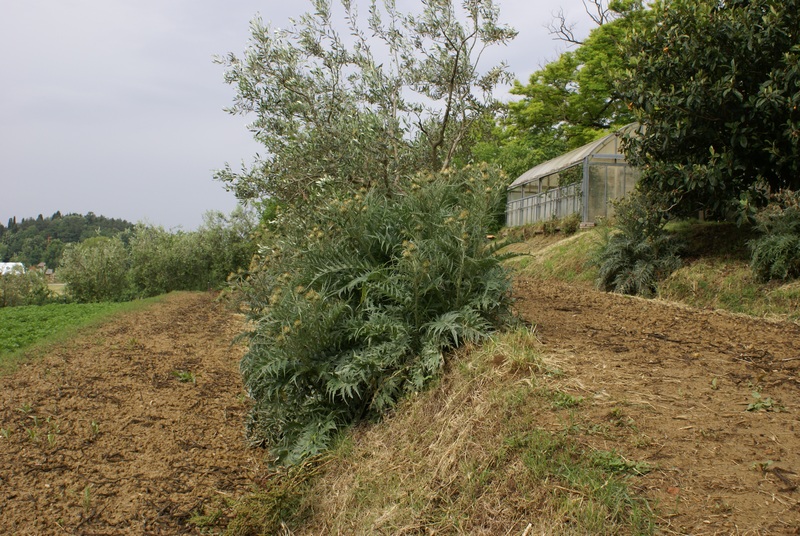
When Giacomo and I returned to Poggio di Camporbiano Piero and his wife Patricia took us on a tour around some of their facilities and the farm. There was a lot to see in a short time. We learned about their on-farm research to develop their own vegetable rennet from a plant that is related to the globe artichoke; their honey production; their greenhouse for propagating vegetable seedlings for field production; their wheat production including a tractor that has the wheels changed depending on ground conditions to reduce compaction effects, machinery for field drying the wheat as it is harvested, the pasta production; animal care; water management; compost making; forest management.
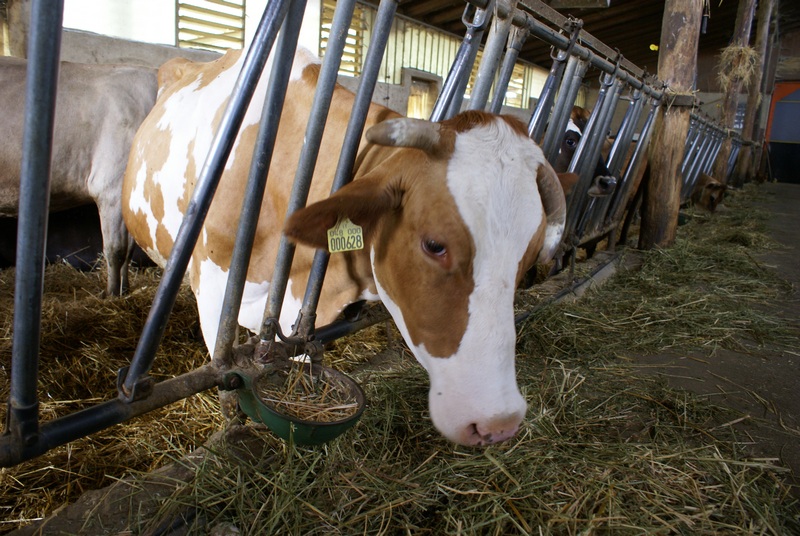
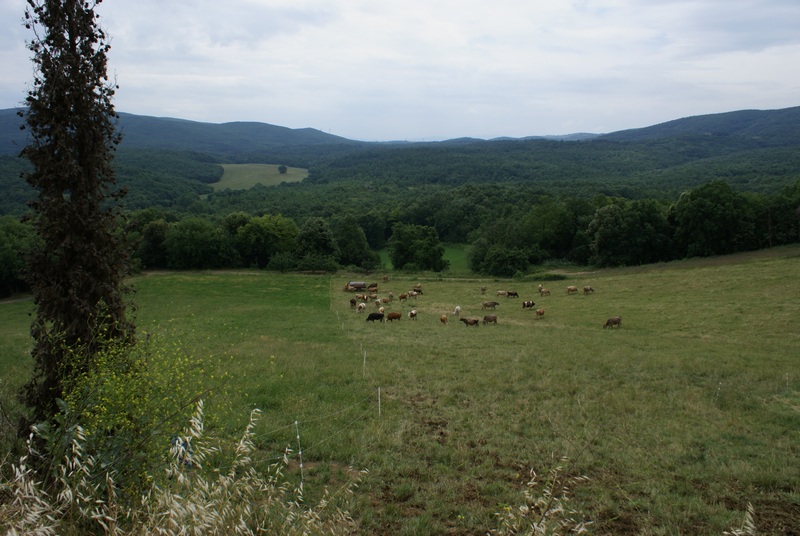
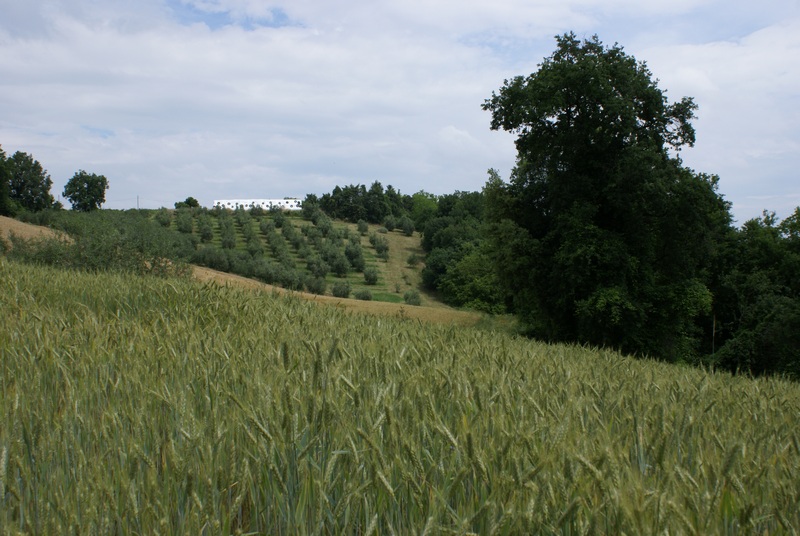
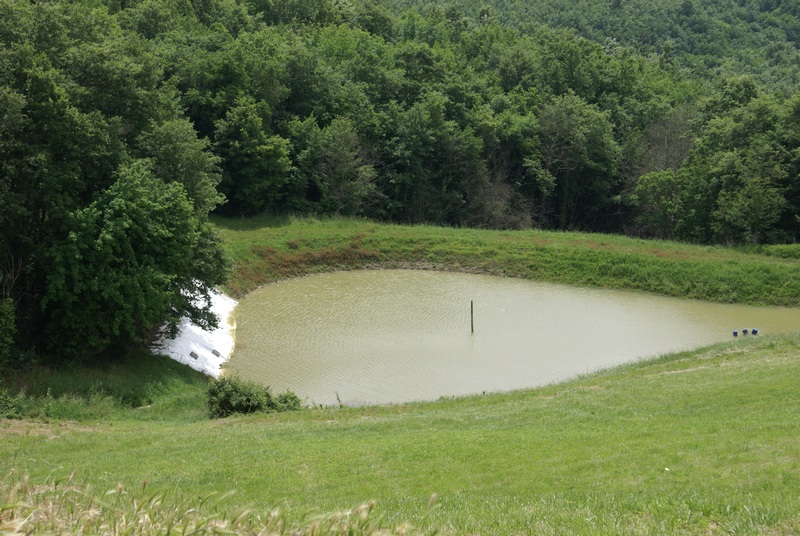
A relative of the globe artichoke provides a natural source of vegetable rennet. Patricia spent about a decade developing a technique for extracting rennet from this plant that didn’t taint the cheeseDairy cows are housed for part of the day, where they are fed lucerne hayDairy cows out in the field, forming part of a very diverse and resilient farming systemWheat and olives, just part of the diversity of Poggio di Camporbiano, a farm that is ecologically and economically very resilientDams for harvesting rainfall are vital for Poggio di Camporbiano, with low annual rainfall and no natural water
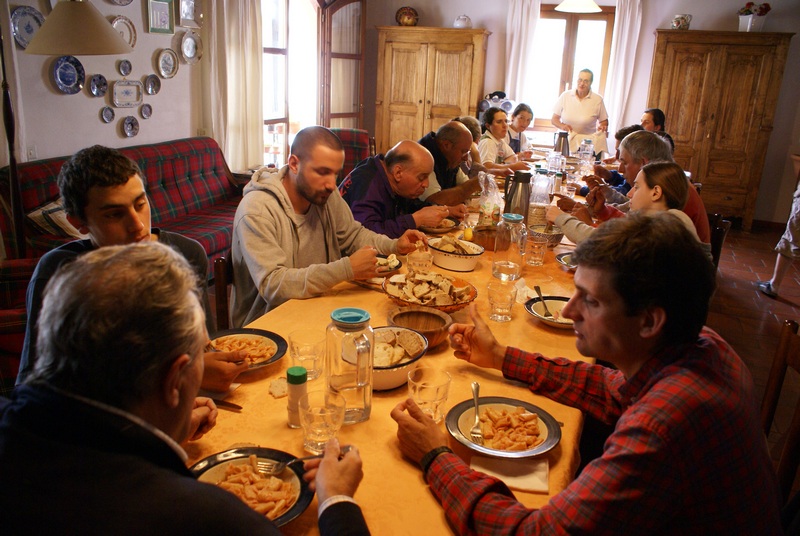
We then joined the whole of their small farm community for a delicious shared lunch. It was only at this time that I fully learnt about the full extent of the cooperative nature of this farm. Here is a small community of people who are deeply committed to an approach to farming and working with nature that is both very relevant now and increasingly relevant for the future.
A delicious shared lunch at Poggio di Camporbiano. Here is a small community of people who are deeply committed to a very holistic approach to farming and working with nature, drawing on traditional knowledge and wisdom but working in a very smart and technologically advanced manner
Today we began our week of activities hosted by the Department of Agronomy and Land Management at the University of Florence. Thanks to my colleague, Professor Marco Bindi, and his staff (Sandra and Giacomo) for organising this week for us.
Our first stop was the University research farm, a 300ha property in the famous Chianti region of Tuscany. It’s a very beautiful place. The manager of the farm talked about some of their research activities, for example work they are doing on erosion control and water conservation through land contouring, and showed us around their facilities. I asked him about changes in climate that they are experiencing. His response was that nothing is reliable with the weather any more. Annual rainfall here is around 400mm. Historically most of this came in the winter months. Now the distribution is unpredictable. Temperatures are increasing, and rapid temperature changes are being experienced at times. Crops are being affected. For example when they pruned the grapes in the dormant winter period last winter they found that there was still sap flowing at a time when there would normally be no such activity in the plant. It is becoming very hard to manage farm activities with such changes.
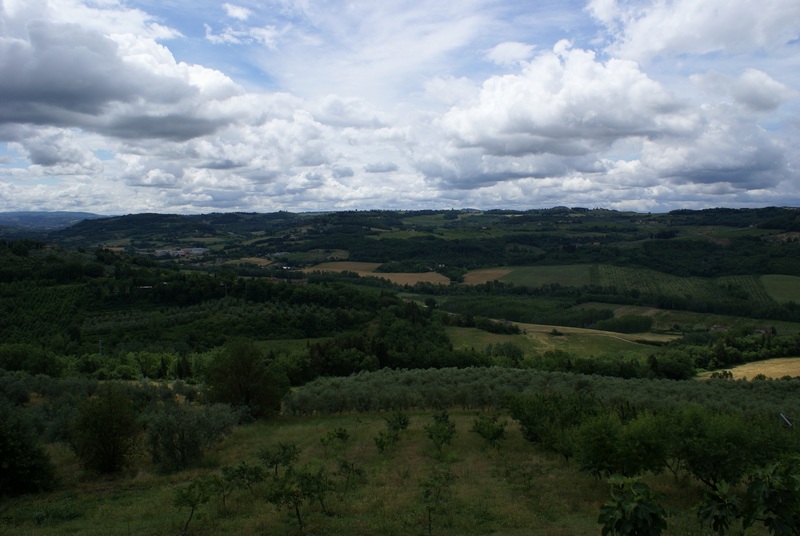
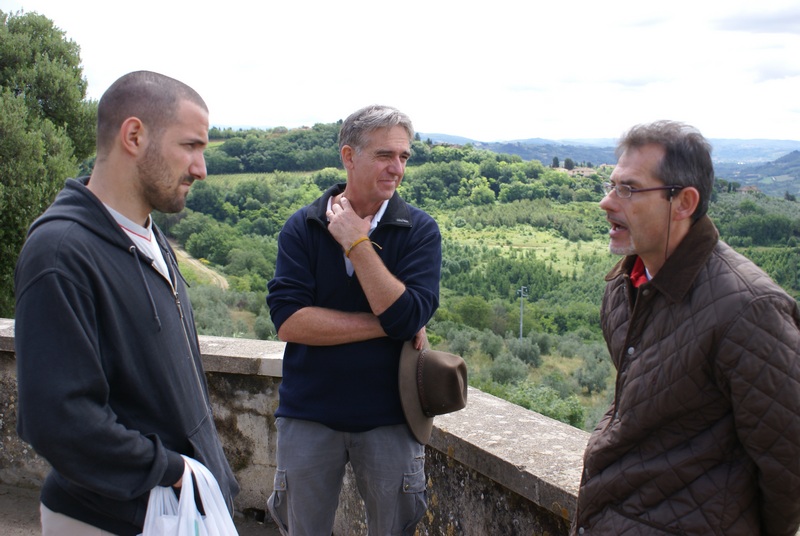
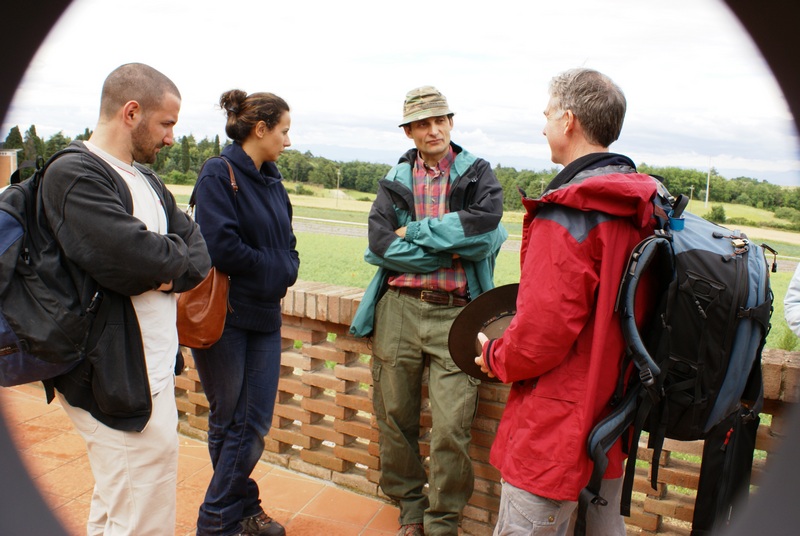
A typical scene from Chianti, TuscanyGavin with Giacomo and the manager of the University research farm who talked about the challenges of more chaotic weather that they are already experiencing
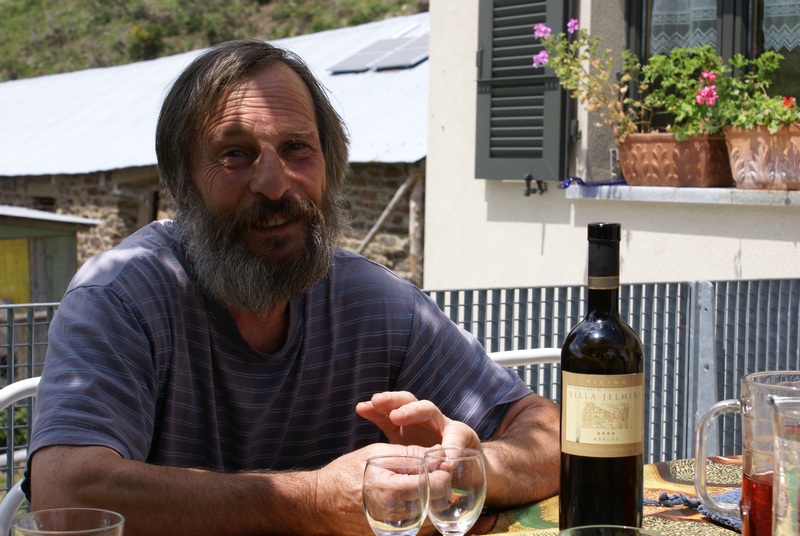
After lunch in the nearby village we drove to a farm called Poggio di Camporbiano where we met Piero Alberti, a biodynamic farmer. Piero has been farming this 200ha property biodynamically since 1986.
With Piero Alberti, one of the smartest farmers I've met. “We can no longer rely on the proverbs of the past”
The farm is organised as a cooperative community with about 14 people living and working there. Piero was the first one to be on the farm and is responsible for most of the farming activities. He is a very very smart farmer, one of the smartest I have met in all of our travels and even compared to some very good New Zealand farmers that I have worked with. The focus is to farm this property as a living organism, with a focus on sound ecology, a strong social environment and a very robust farm economy. To achieve this there are a diversity of production activities, processing of farm products for sale, biodynamic production techniques, recycling of farm waste back into the farm, extremely smart management of a very limited water situation, and implementation of a self-sufficient energy programme. The importance and value of this ecologically balanced approach is reflected in the ability of the farm to sustain economic viability through a severe drought period several years ago. They managed the farm through this drought without needing the external economic support that other farmers in the area needed. In relation to climate change Piero made a very profound statement, that farmers in Italy can no longer rely on the proverbs of the past. Everything has changed and is changing very rapidly. The modern farmer, in his view, needs to both be smart in using available technology and develop a greater sensibility to nature. Their success is reflected in the fact that neighbouring farmers are beginning to follow some of their practices. Our time with Piero was quite limited, but I was so impressed by this story that I arranged a return visit for the following Sunday (3 June).
 Earthlimited | Earth Limited?