A visit to Terre Vivante

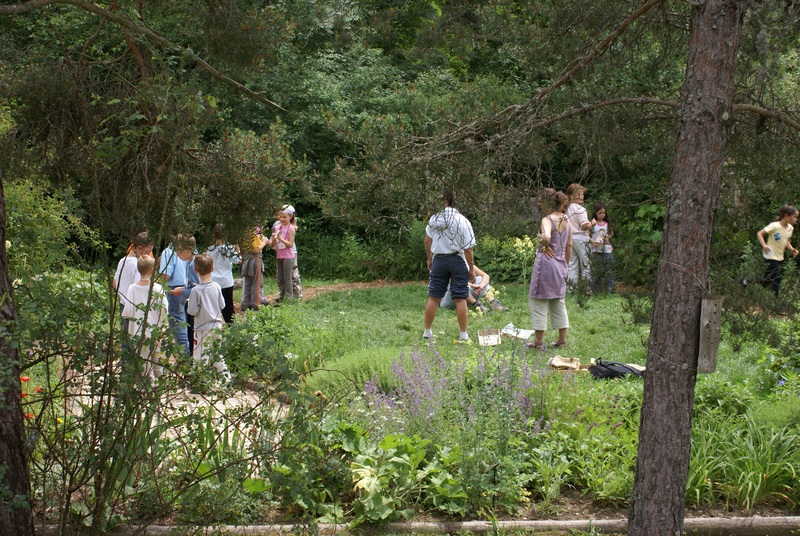
From Dornach we drove to Grenoble in France and then south to the tiny village of Chichiliannes, near Clelles. The place we stayed in was recommended by a French friend in New Zealand who had lived and worked in this area. We stayed here for two nights so that we could visit a place called Terre Vivante. This organisation has existed since 1979 when the magazine ‘Les Quatre Saisons’ was launched by seven passionate ecologists. In 1994 they began the development of a ‘discovery centre’ focused on demonstrating practical ecology. We visited this centre, with its blend of forest walks, gardens and demonstration sites, on a day when a bus load of school children were there to explore, experience and learn. Their presence strongly reinforced the value of providing a living learning environment for all age groups, aimed at demonstrating positive, attainable, actions for a sustainable and resilient 21st century.

In the evening I met with Remy Bacher, the editor of Les Quatres Saisons magazine. I told him how impressed I was with the Terre Vivante centre. It is an excellent educational and resource centre with practical examples of the very simple, local, solutions to many of the environmental problems we have in the world. I also talked about the importance of local people who provide leadership and an example for others to follow. This has been evident everywhere we have been. Remy said that not just Terre Vivante is providing an example for the rest of France, but increasingly the Trieves area as a whole, in the Rhone Alps where Terre Vivante is located. More and more people are aware of the work of Terre Vivante, of the high proportion of organic farmers in the area, and of a very beautiful and well balanced environment.

Terre Vivante, a learning centre for practical ecology
Educational resources at Terre Vivante
A visiting school group

Reflections from a visit to the Goetheanum

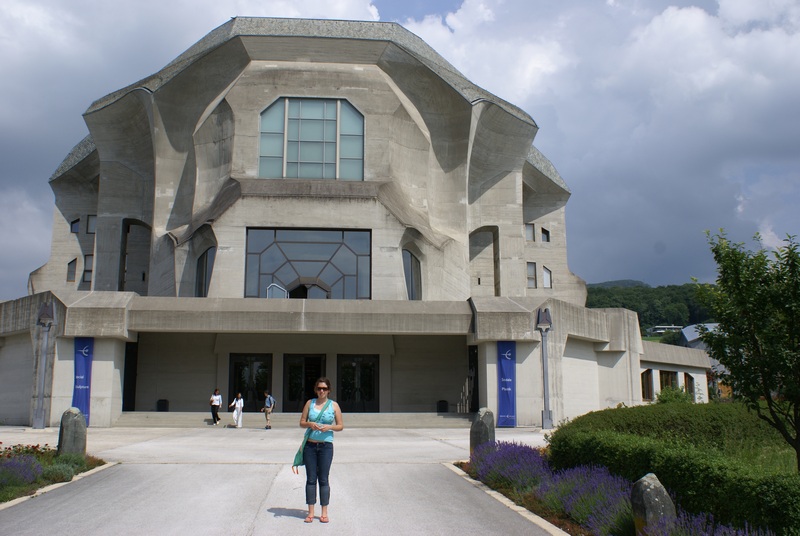
From Lugano we drove through Switzerland to Dornach, near Basel. It was evident everywhere that the Swiss understand the importance of trees in the landscape and in managing water catchments. In Dornach we met with Hans and Ineke Mulder who took us around the Goetheanum, the world centre for Anthroposophy. The Goetheanum is an amazingly organic building. Rudolf Steiner, who designed this and the first Goetheanum, was an incredibly insightful and prolific human being. His merging of spiritual insight and scientific thought covered many disciplines. I’m not an anthroposophist but I do have an open mind. I see a lot of value in what Steiner shared, particularly when expressed through living examples such as Sekem (see post “Sekem, Egypt”) in Egypt and Poggio di Camporbiano (see the posts “A week in Tuscany” and “Poggio di Camporbiano, a very resilient farm”) in Italy, and of course through the education of our daughters at Taikura Rudolf Steiner School in New Zealand. With the multiple challenges and potential crises that we are facing around the world, we need to be open to what Steiner and others have presented to the world. We cannot solve the many problems we have through the narrow, rational, thought that has created them.

The Goetheanum, Dornach

A view from southern Switzerland

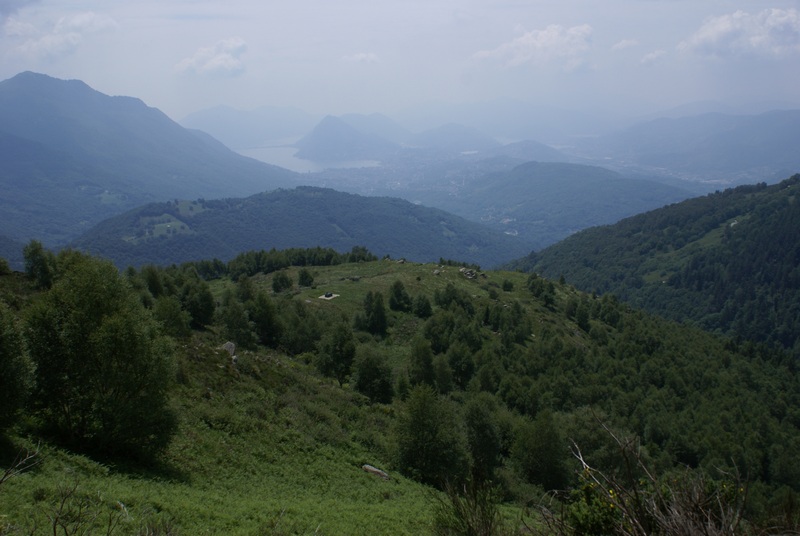
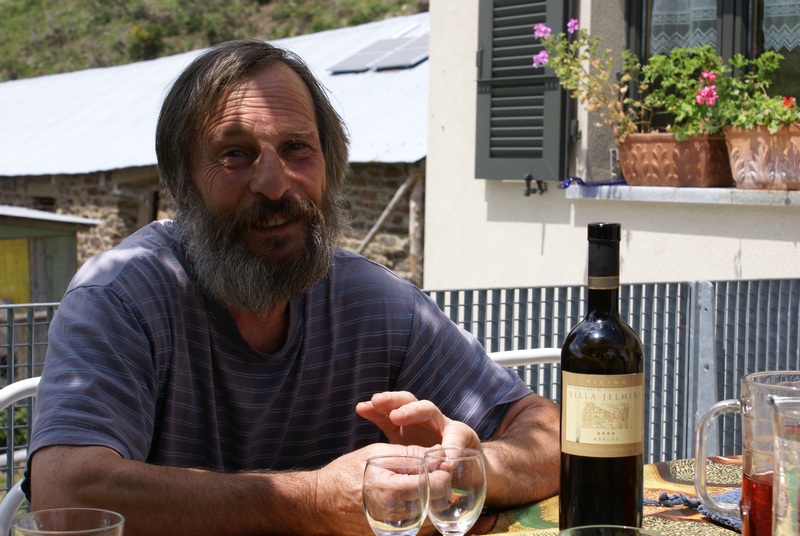
On the afternoon of 5 June we drove north to Milan, arriving in the dark. The next day we crossed the border into Switzerland. Our destination was Lugano, where we were going to stay with the Galli family, who hosted Emma for three months. After a couple of days enjoying Lugano we went for a walk with the Galli family on Saturday (9 June). We drove from their home up into the hills, above the forest line. We then walked to the site of an ancient Celtic settlement looking out towards Lake Lugano. The Celts migrated into Switzerland during the period 500 B.C. to 400 A.D. From this site we then walked up to the summer house of a local farmer. We stopped there and talked a while over some wine. I hadn’t expected this encounter but realised that here was an opportunity for another farmer interview. I arranged to come back today to film an interview with him.

Looking out towards Lake Lugano from the site of an ancient Celtic settlement. The water catchments around the lake are all forested, with strict rules relating to harvesting of trees

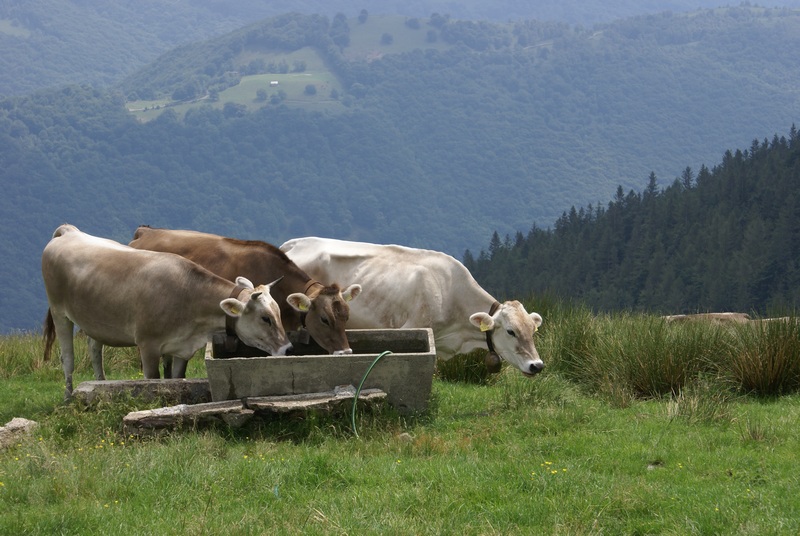
Renzo was not born to a farming family, but became a farmer nearly 40 years ago. His motivation was to live and work with the land, with the natural world. He and his family are alpine farmers. During the winter period they move down to their winter house and their stock are housed. In the summer period they move to the summer house, above the tree line, where the animals are able to free range on the herb pastures. Renzo talked about the dramatic reduction in snow cover that they now experience every winter. The winter rest period, which he considers important for the earth, animals and people, is no longer as it was. The climate is changing and nothing is predictable in the way that it was in the past. This is very unsettling and I think stressful for a family that has worked very hard over a long period. They are already farming organically. Renzo said what more can they do than they already are, working and living in a very balanced way?

There is a long history of winter rest and summer grazing in high alpine areas of Switzerland.  This is beginning to change with higher temperatures and significant reductions in snow cover
There is a long history of winter rest and summer grazing in high alpine areas of Switzerland. This is beginning to change with higher temperatures and significant reductions in snow cover
Renzo, a man who came to live and work with nature 40 years ago and is now finding that he can no longer follow the seasonal rhythms of the past

We need a modern Renaissance

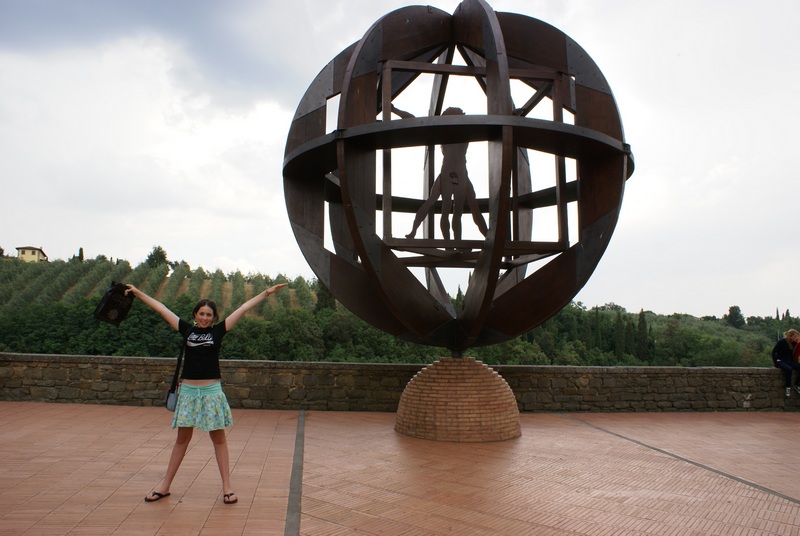
Today is our last day in Florence. It has been an excellent time and I’m very grateful to my host Marco Bindi and his staff. We have managed to mix a few farm visits and interviews, a presentation to people at the University and some local farm leaders, a visit to a research lab in Florence, and taking time to see some of Florence. It has been a great privilege to do the latter with Alice, whose class in New Zealand has just this week begun a study of the Renaissance. Here we are at the heart of the Renaissance, inspired by the work of Leondardo da Vinci, Michaelangelo and others. This experience has reinforced in me a need for a modern Renaissance … a reunification of the arts and sciences as we see in the life and work of Leonardo da Vinci, and a rethinking of how we work and interact with our natural world.

Alice, visiting the village of Vinci where Leonardo da Vinci was born. We need a modern Renaissance ... a reunification of the arts and sciences as we see in the life and work of Leonardo da Vinci, and a rethinking of how we work and interact with our natural world

Poggio di Camporbiano, a very resilient farm

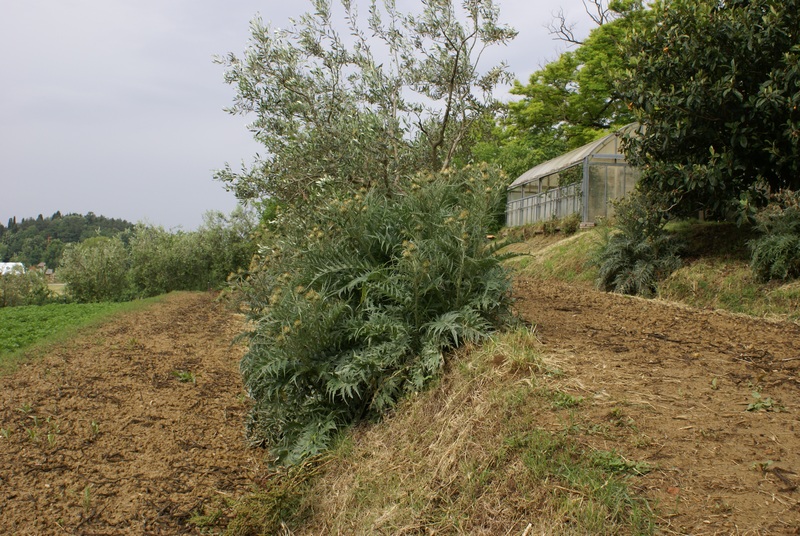
When Giacomo and I returned to Poggio di Camporbiano Piero and his wife Patricia took us on a tour around some of their facilities and the farm. There was a lot to see in a short time. We learned about their on-farm research to develop their own vegetable rennet from a plant that is related to the globe artichoke; their honey production; their greenhouse for propagating vegetable seedlings for field production; their wheat production including a tractor that has the wheels changed depending on ground conditions to reduce compaction effects, machinery for field drying the wheat as it is harvested, the pasta production; animal care; water management; compost making; forest management.

A relative of the globe artichoke provides a natural source of vegetable rennet. Patricia spent about a decade developing a technique for extracting rennet from this plant that didn’t taint the cheese
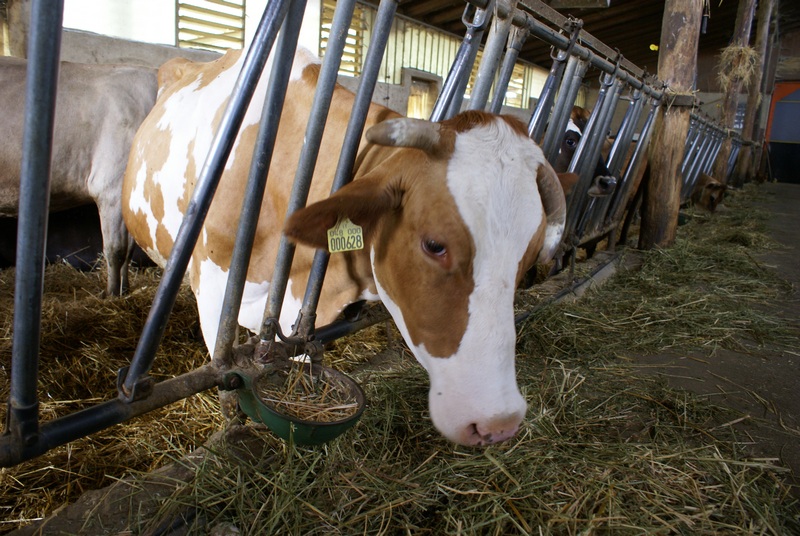
Dairy cows are housed for part of the day, where they are fed lucerne hay
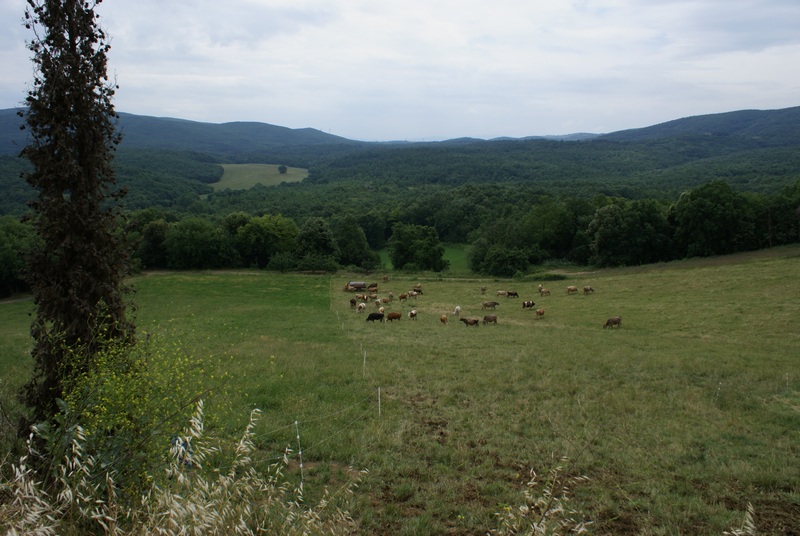
Dairy cows out in the field, forming part of a very diverse and resilient farming system
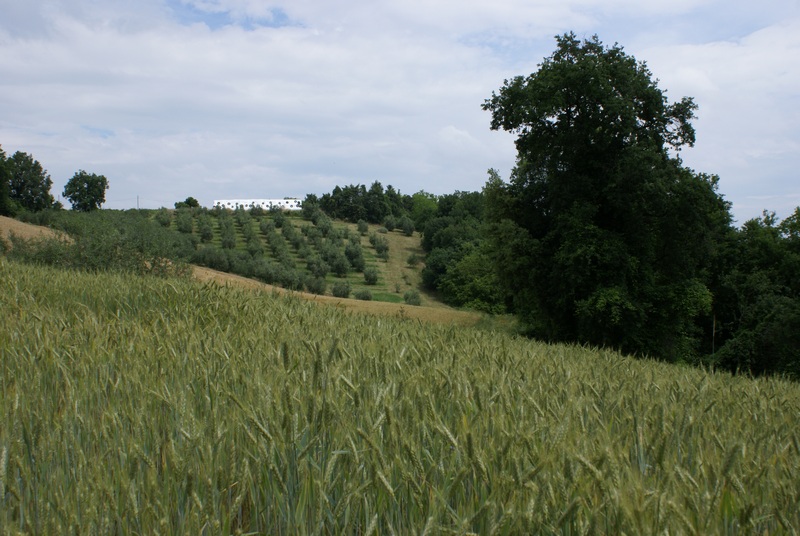
Wheat and olives, just part of the diversity of Poggio di Camporbiano, a farm that is ecologically and economically very resilient
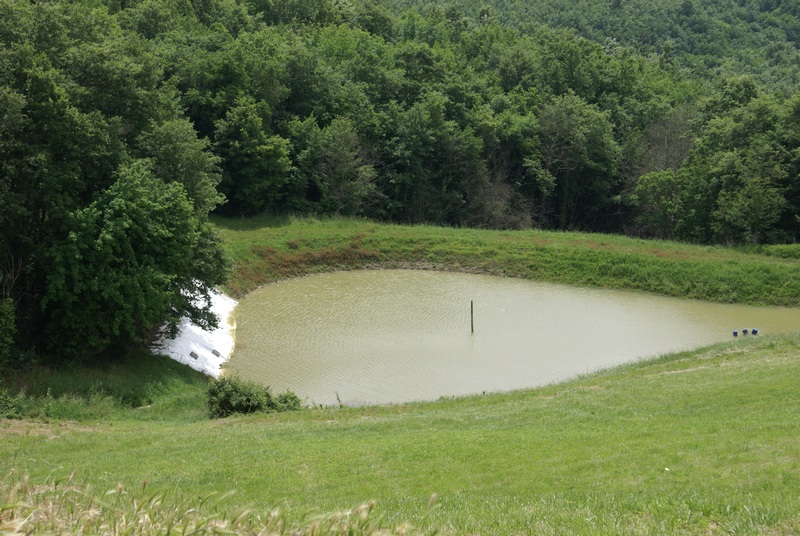
Dams for harvesting rainfall are vital for Poggio di Camporbiano, with low annual rainfall and no natural water

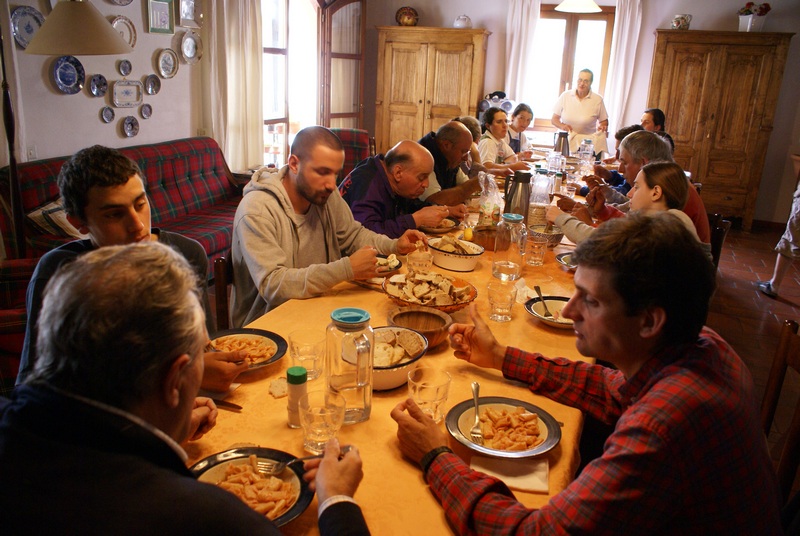
We then joined the whole of their small farm community for a delicious shared lunch. It was only at this time that I fully learnt about the full extent of the cooperative nature of this farm. Here is a small community of people who are deeply committed to an approach to farming and working with nature that is both very relevant now and increasingly relevant for the future.

A delicious shared lunch at Poggio di Camporbiano. Here is a small community of people who are deeply committed to a very holistic approach to farming and working with nature, drawing on traditional knowledge and wisdom but working in a very smart and technologically advanced manner