Reflections from St. Cyprien

After leaving Chichilianne we drove west and then south to the village of St. Cyprien to stay with Janet Hulse, the elder sister of my good friend Julia. Along the way we stopped for a night in another small village in the Puy de Dome region, south of Clermont-Ferrand. We’re now at Janet’s place near St. Cyprien, in the south central area of France. Tomorrow I am meeting with a local farmer who I met at the market this morning. This may well be my last interview on this journey.

We have done a lot of travelling but I have managed some interactions with people as well as continued to reflect on lessons from this journey. I have talked increasingly about the importance of finding ways of working harmoniously with our earth, with the natural world. This concern is shared by the well know British scientist, James Lovelock, who developed the so-called Gaia hypothesis. However our views differ on how we might work harmoniously. In his recent book “The revenge of Gaia” he expressed his concerns about the state of the earth and suggested a planned retreat of humans from nature as part of the solution, with a focus away from agriculture and towards synthetic food production. I disagreed with this view before and disagree even more strongly now. The many people we have met in different places and their very positive actions support a different approach that is focused on an intelligent and heart-felt re-engagement with nature. Everything we have, all of the wonderful and undesirable results of the industrial revolution and our modern technological revolution, have been derived from the earth in some form or another. We cannot so easily retreat as Lovelock thinks. At the same time I totally agree that we need to do something. Fortunately there are people who are acting, and we need to pay attention to them. I look to the leader of the Karen village in northern Thailand and his very smart 16 year old daughter, to the Buddhist monk north of Bangkok, to the work of Ajarn Yak in Thailand, to a wise 78 year old man in northern Viet Nam, to wise local leaders in Nepal, to the work of Sekem in Egypt, and more recently to the inherent understanding of our place in landscape, in nature, that is still visible in parts of Europe and in the work of the best farmers here.

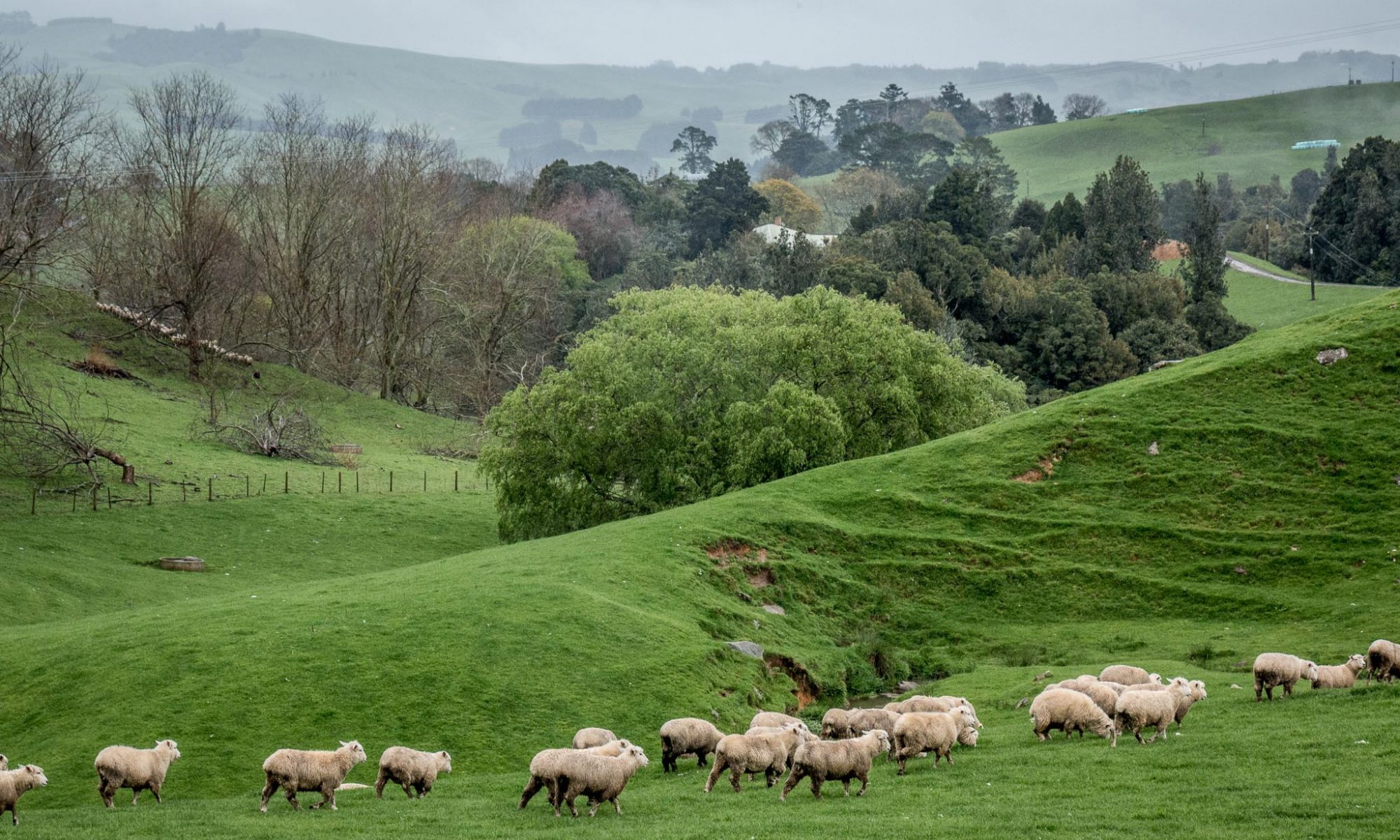
In the parts of Italy we visited, Switzerland, and now in France we see landscapes where there is a history of understanding the importance of forest and water management. In all the places we’ve been in these countries I have seen hills covered with trees that in New Zealand and many parts of Asia have been stripped bare. In Switzerland, water catchment areas are forested. In New Zealand, when I gave a talk to a Regional Council a couple of years ago I was considered naïve to suggest that planting trees was the most important thing we could be doing as a response (adaptation and mitigation) to climate change. Everywhere I’ve been, every place I’ve seen, every person I have spoken to over the last four months has reinforced this view. In Europe I see the legacy of centuries of understanding the importance of managing whole landscapes. We don’t have this legacy in New Zealand. What we do have is a freedom of choice that many other countries and people do not have any more. But for how much longer?

It is very clear to me now that there is a great, unrealised, opportunity to develop truly effective responses to climate and other global changes by simply opening our eyes and ears to the very good things that people are already doing all over the world. In fact I believe we must do this. Things are now moving too fast for the politicians and scientists to keep up. People are already acting, some are already well ahead in their work and thinking.

A visit to Terre Vivante

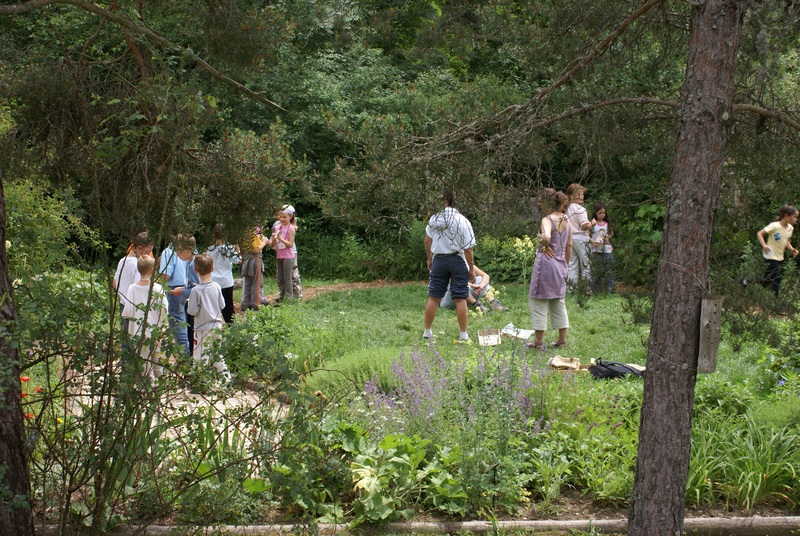
From Dornach we drove to Grenoble in France and then south to the tiny village of Chichiliannes, near Clelles. The place we stayed in was recommended by a French friend in New Zealand who had lived and worked in this area. We stayed here for two nights so that we could visit a place called Terre Vivante. This organisation has existed since 1979 when the magazine ‘Les Quatre Saisons’ was launched by seven passionate ecologists. In 1994 they began the development of a ‘discovery centre’ focused on demonstrating practical ecology. We visited this centre, with its blend of forest walks, gardens and demonstration sites, on a day when a bus load of school children were there to explore, experience and learn. Their presence strongly reinforced the value of providing a living learning environment for all age groups, aimed at demonstrating positive, attainable, actions for a sustainable and resilient 21st century.

In the evening I met with Remy Bacher, the editor of Les Quatres Saisons magazine. I told him how impressed I was with the Terre Vivante centre. It is an excellent educational and resource centre with practical examples of the very simple, local, solutions to many of the environmental problems we have in the world. I also talked about the importance of local people who provide leadership and an example for others to follow. This has been evident everywhere we have been. Remy said that not just Terre Vivante is providing an example for the rest of France, but increasingly the Trieves area as a whole, in the Rhone Alps where Terre Vivante is located. More and more people are aware of the work of Terre Vivante, of the high proportion of organic farmers in the area, and of a very beautiful and well balanced environment.

Terre Vivante, a learning centre for practical ecology
Educational resources at Terre Vivante
A visiting school group

Reflections from a visit to the Goetheanum

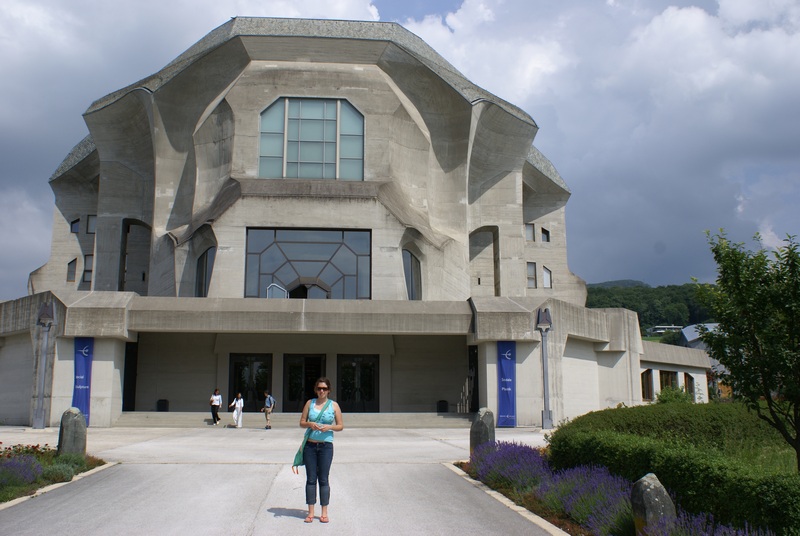
From Lugano we drove through Switzerland to Dornach, near Basel. It was evident everywhere that the Swiss understand the importance of trees in the landscape and in managing water catchments. In Dornach we met with Hans and Ineke Mulder who took us around the Goetheanum, the world centre for Anthroposophy. The Goetheanum is an amazingly organic building. Rudolf Steiner, who designed this and the first Goetheanum, was an incredibly insightful and prolific human being. His merging of spiritual insight and scientific thought covered many disciplines. I’m not an anthroposophist but I do have an open mind. I see a lot of value in what Steiner shared, particularly when expressed through living examples such as Sekem (see post “Sekem, Egypt”) in Egypt and Poggio di Camporbiano (see the posts “A week in Tuscany” and “Poggio di Camporbiano, a very resilient farm”) in Italy, and of course through the education of our daughters at Taikura Rudolf Steiner School in New Zealand. With the multiple challenges and potential crises that we are facing around the world, we need to be open to what Steiner and others have presented to the world. We cannot solve the many problems we have through the narrow, rational, thought that has created them.

The Goetheanum, Dornach

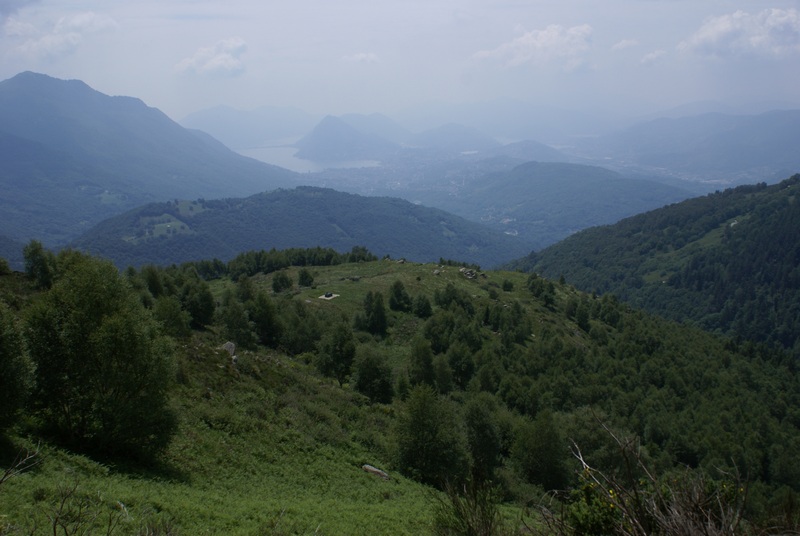
A view from southern Switzerland

On the afternoon of 5 June we drove north to Milan, arriving in the dark. The next day we crossed the border into Switzerland. Our destination was Lugano, where we were going to stay with the Galli family, who hosted Emma for three months. After a couple of days enjoying Lugano we went for a walk with the Galli family on Saturday (9 June). We drove from their home up into the hills, above the forest line. We then walked to the site of an ancient Celtic settlement looking out towards Lake Lugano. The Celts migrated into Switzerland during the period 500 B.C. to 400 A.D. From this site we then walked up to the summer house of a local farmer. We stopped there and talked a while over some wine. I hadn’t expected this encounter but realised that here was an opportunity for another farmer interview. I arranged to come back today to film an interview with him.

Looking out towards Lake Lugano from the site of an ancient Celtic settlement. The water catchments around the lake are all forested, with strict rules relating to harvesting of trees

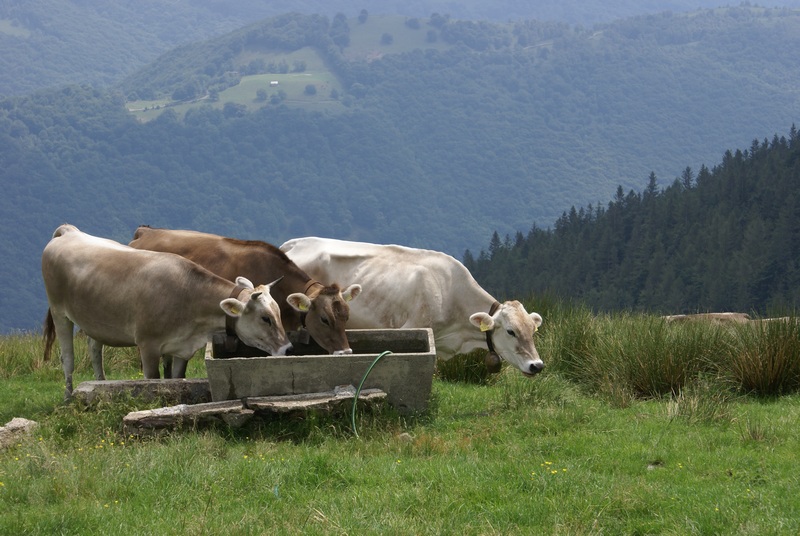
Renzo was not born to a farming family, but became a farmer nearly 40 years ago. His motivation was to live and work with the land, with the natural world. He and his family are alpine farmers. During the winter period they move down to their winter house and their stock are housed. In the summer period they move to the summer house, above the tree line, where the animals are able to free range on the herb pastures. Renzo talked about the dramatic reduction in snow cover that they now experience every winter. The winter rest period, which he considers important for the earth, animals and people, is no longer as it was. The climate is changing and nothing is predictable in the way that it was in the past. This is very unsettling and I think stressful for a family that has worked very hard over a long period. They are already farming organically. Renzo said what more can they do than they already are, working and living in a very balanced way?

There is a long history of winter rest and summer grazing in high alpine areas of Switzerland.  This is beginning to change with higher temperatures and significant reductions in snow cover
There is a long history of winter rest and summer grazing in high alpine areas of Switzerland. This is beginning to change with higher temperatures and significant reductions in snow cover
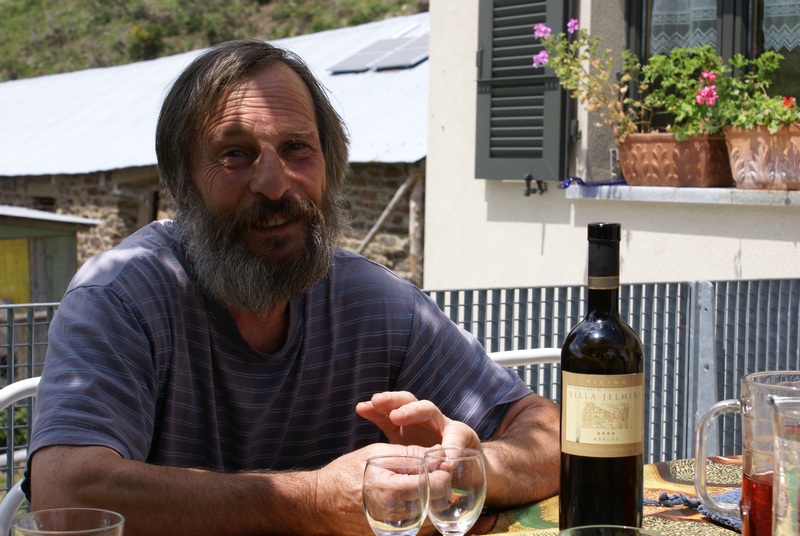
Renzo, a man who came to live and work with nature 40 years ago and is now finding that he can no longer follow the seasonal rhythms of the past

We need a modern Renaissance

Today is our last day in Florence. It has been an excellent time and I’m very grateful to my host Marco Bindi and his staff. We have managed to mix a few farm visits and interviews, a presentation to people at the University and some local farm leaders, a visit to a research lab in Florence, and taking time to see some of Florence. It has been a great privilege to do the latter with Alice, whose class in New Zealand has just this week begun a study of the Renaissance. Here we are at the heart of the Renaissance, inspired by the work of Leondardo da Vinci, Michaelangelo and others. This experience has reinforced in me a need for a modern Renaissance … a reunification of the arts and sciences as we see in the life and work of Leonardo da Vinci, and a rethinking of how we work and interact with our natural world.

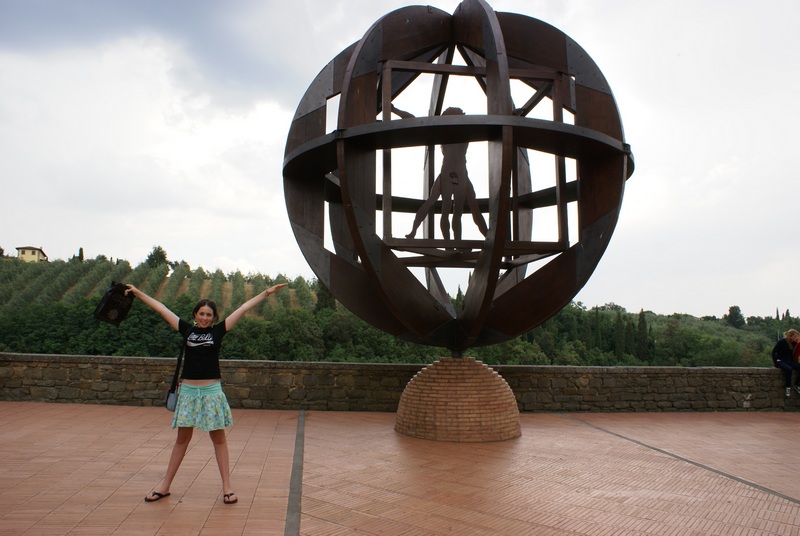
Alice, visiting the village of Vinci where Leonardo da Vinci was born. We need a modern Renaissance ... a reunification of the arts and sciences as we see in the life and work of Leonardo da Vinci, and a rethinking of how we work and interact with our natural world