Earthlimited.org | Earth Limited? is currently under going a rebuild. Apologies for any inconvenience.
Contact: +64 6 870 8466; Email: inquiries@earthlimited.org
bringing imagination to climate change and resilience
Earthlimited.org | Earth Limited? is currently under going a rebuild. Apologies for any inconvenience.
Contact: +64 6 870 8466; Email: inquiries@earthlimited.org
I was one of the subjects of a segment on Rural Delivery on TV1 this morning. I was interviewed several weeks ago, along with Tim Dinneen, a Hawke’s Bay farmer who we had previously interviewed as part of the two-year Sustainable Farming Fund project that I am managing.
The interview with Tim and myself was screened this morning and is now archived. Go to Chapter 2 for the 10 minute segment. I’m not sure if this can be viewed from overseas. In case you can’t view it there is at least some background material to the interview on the Rural Delivery website.
Climate change is real and we humans have contributed significantly to this. I have no doubt in my mind now. The scientific evidence is there. More importantly people on the ground are experiencing profound changes. Hearing this from local people is one of the most important things that I gained from travelling through Asia to Europe with my family in the first half of this year. If you haven’t read our blog from this journey check in the archives.
Another important thing that I gained was a deepened sense of hope amidst the very clear evidence of overpopulation, pollution and environmental degradation in many countries. There are people, a minority still, who are acting for the future now. I’ve talked about this as I shared stories from our journey.
What I also gained was a deepened understanding of the long-term connection to nature that exists in many countries, both eastern and western. This connection is not always obvious, but it is evident in some landscapes and in the things that some people are now doing. There is a renewal, a reawakening, a rethinking of things that is beginning to emerge. My experience of this was cause for reflection on New Zealand where we are still working out how to live together and with our unique, but hugely modified, environment.
With only 4 million people and an abundance of natural resources, surely we can get it right? If we can’t, who can? What we need to do, and this is a very big challenge for New Zealanders, is to embrace our past, look beyond our differences and start working together for our collective future much more than we are. I hear it said that we can’t look forward until we have effectively dealt with the past or resolved our differences. Will we ever? There is a different way. By working positively together for our shared future we will also find ways to address the many social, economic and environmental issues that we have. In my view it is a matter of urgency that we do this. Change is happening in the world to a much greater degree and at a much faster rate than we fully appreciate here in New Zealand. I’m not a doomsday person but I do believe that we are either going to choose or be compelled to work together much more than we presently are. If we do this by choice and with vision then we have real potential to provide leadership for the world.
Dear Everyone!!
Late last year my family and I made a decision … my older sister and I had sold our Mum’s small house in New Zealand. We had a choice, either pay off the mortgage on our own home or travel and document grassroots perspectives on climate change. Of course you all know what we chose to do.
It took a huge effort to organise our journey, but we could never have done it without all of you. In various ways you all helped us along the way. I want to especially mention Khun Tuenjai and her amazing network of people in Thailand. You organised such a busy itinerary for us to start our journey, but it was such a rich experience and we met so many warm, generous people in your country… too many to name here. After Thailand we were on our own a lot more and it was very hard work at times to meet and film people and places. But we managed. Viet Nam was hard, but we have some very good friends there who did their very best to help us. Our brief stay in India was greatly helped by Andy in New Delhi.
Nepal was both challenging and inspiring … for Lena, Ali and I it was truly a highlight of the journey to walk together for 19 days and to cross Thorong La Pass (5400 metres). Amidst illness and long days walking we managed to capture a few gems on film. I greatly enjoyed meeting Ngamindra and his colleagues in Kathmandu and I sincerely hope we can find a way to work with and support you. Everything in Egypt came together at the last minute, but again we met such warm, hospitable people who did their best to help us. Thankyou to Angela and Selim, and to Prof Zakharia for compelling me to go out to the Western Desert where we again met some wonderful people at Bahariya Oasis … thankyou Ahmed and Corien.
In Italy I have to thank Marco and his small team and I sincerely hope we can keep working together and find ways to work with all of these other wonderful people we have met. And who would have imagined the connection with Katharina and Alfredo in a beautiful valley in Umbria … a place we went to because the accommodation was a good deal and it looked nice! In Milan, thankyou to Iva and Paolo for having us in your home. We experienced the same warmth again with the Galli family in Lugano. Our time in France was too short, but thanks to Remy for having a bit of time to meet and talk… and to Jean-Pierre and Claire in the south of France for your wonderful work. Unfortunately I’m not able to communicate to many of the real grassroots people we met … farmers, village leaders and others … Thankyou to those of you who helped me meet all of these people.
A special mention goes to my cousin, Michael, who has done such a wonderful job with the blog page. And to my big sister Jill for buying me such a great hat!…. and to everyone else who I haven’t mentioned by name!!
We’ve come to the end of our journey now. On Saturday, 7 July we leave London for New Zealand. Lena is staying on here until late October and has already started a job here in London. For me the last week or so has been a time to rest and reflect. I have a lot to do when I get home, not least of which is to start earning some money again!! I still don’t know yet how I’m going to produce a documentary out of all that we’ve done. But it will happen somehow.
For most of our journey we’ve been experiencing warm, often very hot, weather. Not so since we came to England! Temperatures have been in the late teens to low 20s. There was flooding last week, including in Doncaster, South Yorkshire where Karen’s Aunt and Cousins live. On the BBC news website someone suggested that there was a need for reafforestation in many parts of England, in hills that were deforested at least 500 years ago. A big source of the problem, someone else said to the media, is that there have been too many housing developments in flood plains since World War 2. Along with these developments have been storm-water drainage systems and other infrastructural developments (such as motorways) that have tended to be contrary to, rather than in harmony with, natural water flows. The experts say that climate change is a factor. In the past floods often occurred after cold winters, with snow melt. Not so now, they are more a result of unseasonal rainfall events such as has been experienced here over the last week. What is the real source of the problem, what are the right solutions? The reality of the early 21st century is that these issues are the legacy of centuries, perhaps thousands of years, of human activity that has often been contrary to nature and natural processes.
What lessons are there to learn from the past? Visiting Stonehenge yesterday was cause for some reflection on this question … a place that first had a human presence around 5000 years ago in an environment that was originally forested. But from listening to the audio commentary as I walked around it is clear that we have many more questions than answers. There is an awful lot that we are very ignorant of, but we’re not very good at acknowledging our ignorance in all of the things we do in our modern world. We drove down the road to Old Sarum, the subject of what I consider to be a very powerful painting by Constable. A painting that to me is a reflection, actually a question, on the right relationship between human and nature. It was a Constable-like day with many clouds in the sky, wild and windy, a bit of sun trying to break through.
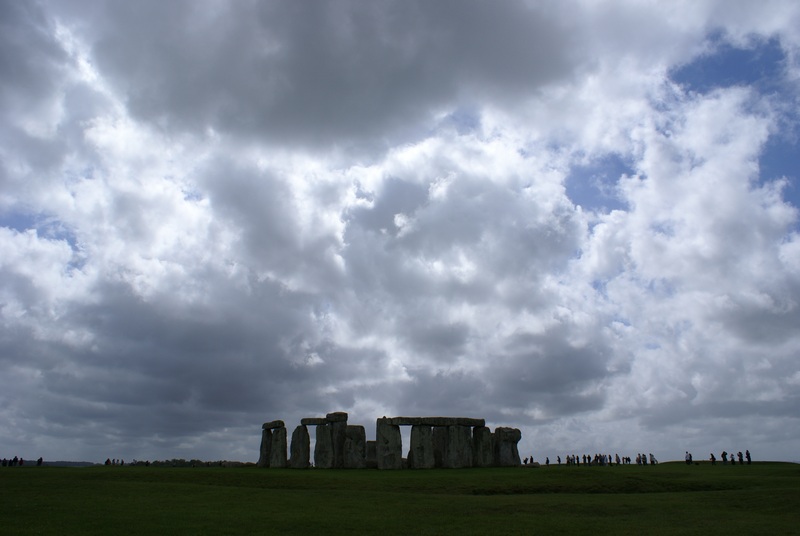

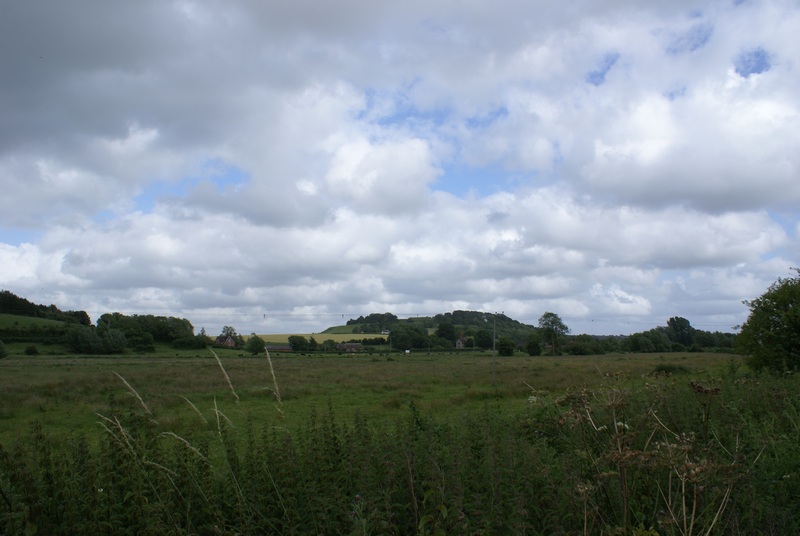
The end of this journey is near and it’s a beginning of another phase that I expect to be very challenging. Thanks to my Mum’s estate, I found the resources to buy professional film gear and head off on a journey. I found support from some amazing people along the way, firstly from our amazing friends in Thailand, in particular Khun Tuenjai, and then from others in different places. I don’t have the resources to do any more. It’s time to get back to New Zealand and start earning some money again. But so many people have given so much and shown belief in me and what I’m doing. I’ll keep on working as well as I can to make something out of all of this.
 Earthlimited | Earth Limited?